Showing posts with label Flathead Lake. Show all posts

Tuesday, December 16, 2014

Easter in December?


More Swans on the Flathead River
12/15/2014
East of Perma, Montana

No fife did hum nor battle drum
Did sound its dread tattoo
But the Angelus bell o'er the Liffey swell
Rang out through the foggy dew.
--Irish ballad 

To hear the Clancy Brothers and Tommy Makem sing this song of the Easter Rebellion in 1916, click here.  And yes, in the course of this post I'll tie in both fog and Easter (and the Irish as well--in the form of a church built for an Irish community in, I kid you not, 1916, the year of the Easter Rebellion).

Monday morning I rose with a list of chores that I would need to get done during the day, if only to feel as if I'd accomplished something.  But even as I stripped the bed and filled the washing machine, I watched the sun light up the hills surrounding our home.  You should never pass on a sunny day when you live in a winter climate, so I threw caution to the wind, grabbed my camera and my new Garmin Montana 650t GPS unit (note how I made sure to get the Montana and not the Colorado or Alaska model), and hit the road in search of more photographic opportunites, not to mention geocaches.  Photography is, after all, the use of light (φῶς, φωτός) to write or draw (γράφειν), and this morning promised beautiful light.

I hadn't made it to Highway 200 (roughly five miles from home) before I was in a deep fog--the kind that you really hate to drive through.  But by now I was on a mission, and besides, I really did have to get to Polson to pick up new test strips for my blood glucose meter.  The fog held on through Plains, but by the time I reached Paradise, some six miles further east, I was back in sunshine and all set for a great day on the river.

The first of my pre-programmed geocaches was a couple miles east of Perma on the side of Highway 200, and I quickly added "Sword Play" to my list of finds.   A few miles further another cache was hidden, this time by a rather long pull out on the river side of the road.   The name of the cache was "Why did you stop here?" and the cache owner had suggested we come up with a reason--presumably one other than "I wanted to find your cache."  The swans were swimming (may have been seven, I didn't count them all), but I grabbed a couple as seen through the trees above.  I also grabbed the cache, and proceeded on to the next on my list.

The Mission Mountains
12/15/2014
West of Dixon, Montana


My next scheduled caches were in the town of Dixon, but before I reached the town, the Mission Mountains drew my attention, and I just had to pull off the road and take their portrait.  The Mission Mountains are one of the more spectacular ranges in our part of the country, and they never fail to impress visitors.  Well, there have been times I've brought guests to see them, only to have the mountains hide completely behind fog or clouds.  Who knew mountains could be so shy.


The Flathead River at Dixon
12/15/2014
Dixon, Montana


I tried for two different caches in Dixon, one at a fishing access by the river and the other in the town's tiny city park, but I was unsuccessful with both.  I did get a great view of the river, a view I had never before seen, and looking downstream, there was a bald eagle perched high on a tree along the river's bank.  I switched lens and took several shots of the eagle, but I'm not particularly happy with any of them.

Just east of Dixon, I turned north off MT 200 onto Highway 212 and stopped almost immediately to grab the cache hidden under the bridge spanning the Jocko River.  The cache's name is Jocko's Troll, and the clue suggested looking just where you'd expect to find a troll--well under the bridge, silly.  There was a hint suggesting that the cache was along the Jocko under a rocko, but when I found it, the cache was in plain sight, with no rock covering it at all.  After signing the log, I carefully replaced the cache where I found it, then laid a large flat rock over it.  Wouldn't want the hint to be wrong now would I?


Bald Eagle leaving its perch
12/15/2014
Old Agency (Dixon), Montana

North of the river, as I was approaching the Lake County line, I passed two bald eagles perched on power poles along the highway.  Turning around, I pulled off the road opposite the large birds and caught several shots of the two of them, before they finally flew out of range.  And yes, I know I clipped his wings in this shot, but he looks so majestic flying there that I'm using it anyway.

Turning the car back around, I stopped to grab a cache at the entrance to the National Bison Range, and at the same time grabbed another photo of the snow-capped Mission Mountains.  The one peak I wanted to capture, however, was behind some trees and I figured I'd have plenty more views of that peak before the day was out.  Famous last words.

St. Joseph's Catholic Church
12/15/2014
Moiese, Montana

South of the town of Charlo, I turned onto Dublin Gulch Road and grabbed the cache hidden at St. Joseph's Catholic Church.  I've passed this church many a time, but I'd never stopped to read the historic marker on the front of the church.  The full text for the placard can be found here, but the main items of interest are that the church was built in 1916 (I believe), had its last service in 1978, and is one of only two churches in Montana built in the Craftsman style.  See.  That's why I go geocaching.  I learn so much about the area.

After leaving the church, I relied on my GPS unit to lead me to more caches, having forgotten to grab the Montana Atlas which would show me the back roads that cross the landscape connecting the various area farms.  Some of these roads are blocked by fences, and most are dirt, but hey, I was out exploring, and I didn't have to be home until 4 or so to fix supper for Kevin.  Oops, it's already 3 and I'm an hour from home and haven't done my shopping yet.  Oh well.  It will all work out.

My main destination for today's trip was actually the Ninepipe National Wildlife Refuge, a 4,027 acre refuge established in 1921. I figured with the light and all, I'd be sure to catch some birds in my lens. I had programmed several caches hidden around the Refuge in my Garmin, and figured I'd catch a few more before I continued on to Polson and shopping. I did find the cache at the Stocky Memorial, a parking area dedicated to the memory of biologist Dwight "Stocky" Stockstad, who was responsible for much of the Refuge being set aside, including the 70 acres dedicated to him. I previously had no idea such a place (or person) existed.

The next two caches managed to elude me, even though my GPS told me I was right on top of them.  What I did notice was that my fingers were getting very cold, and the beautiful sunny day had disappeared into a heavy bank of fog.  I caught the Easter 2014 cache, so named for the date on which it was hidden.  The clue suggested that the cache site would tie in to the name, and sure enough, when I rolled away the rock, all was revealed.  The cache container, a camouflaged plastic Easter egg, gave me some trouble when I tried to open it, but it all worked out in the end.

Down the road another mile, I stopped at the Leon Community Center, but again, even though my GPS told me I was at ground zero, I found nothing and felt even colder than I had earlier.  At this point, I was one mile away from US Highway 93, and I decided to call it a day.

Traffic on 93 was moving very slowly, as the fog had moved in completely.  The mountains, just a couple miles distant, were hidden to the point of being invisible through the fog.  I drove north, and by the time I reached the Tribal Governmental Complex at Charlo, I was back out of the fog, but I had no desire to seek out any more caches today.  There's always tomorrow, and with the seven I did find, I passed my goal of getting 300 caches reported by the end of 2014.  (Geocaching.com now shows me with a lifetime total of 302 caches, and that will probably change before New Year's Eve.)

In Polson, I was doing my shopping when Kevin called to ask if supper would be ready by four.  Oops.  Nope.  I'm in Polson, over a hour away from home.  Kevin suggested that he would get something for himself and suggested that I do the same.  Accordingly, when I saw Bambino's Pizza and Pasta alongside Polson's main street, I stopped and had a wonderful dinner of Lasgna Fresca, with a side salad and fresh, crusty bread to dip in a balsamic/oil/herb mix.  I left the restaurant with a piece of Tiramisu in a box, and the sure knowledge that I will return to Bambino's in the near future.


Polson Bay and The Narrows, Flathead Lake
12/15/2014
Polson, Montana

Thursday, April 22, 2010

7. Flathead County, Montana


7


As I have noted in earlier posts, at the time Montana Territory was created in 1864, most of the land west of the Continental Divide was in Missoula County, first formed in 1860 as one of the counties of Washington Territory. Montana became a state as part of the Omnibus Statehood Act of 1889, and Missoula County remained undivided. That would change in the 1890s. In 1891, the Great Northern Railroad arrived in the Flathead Valley and established its division point north of Flathead Lake. In 1892, the city of Kalispell was incorporated around that railroad division point, and in 1893, Flathead County was created out of the northern extent of Missoula County. In years to come, Lincoln (number 56) and Lake (number 15) Counties would be formed out of Flathead.


The Flathead County Court House

Flathead County was established in 1893 and the courthouse built in 1903. The county takes its name from Flathead Lake, the largest freshwater lake in the U.S. west of the Mississippi River, which in turn is named for the Salish people native to the area erroneously named the Flathead Indians by early explorers. The county seat is Kalispell.

Flathead Lake and the Mission Mountains

Today, Flathead County is one of Montana’s fastest growing areas. It offers year round recreational opportunities situated as it is between Glacier National Park and Flathead Lake. One of Montana's main destination ski resorts is The Big Mountain, located just north of Whitefish, Flathead County's second largest city. Whitefish is served by Amtrak, as is Essex, at the southern end of Glacier National Park. The Izaac Walton Inn at Essex was originally the Great Northern Station and Hotel. Essex is the point where the railroad puts extra locomotive power on trains to get them over the Continental Divide at Marias Pass, just a few miles east. I always try to schedule my trips through the area so that I can have either lunch or dinner at the Inn. For the really adventurous, the Inn has railcars refurbished as overnight cabins, and they're working on redoing a locomotive to serve as a cabin.

Lake MacDonald, Glacier National Park

In 2000, the US Census showed 74,471 people living in the community. The 2009 estimates indicate a 20.3% growth rate, with an estimated county population of 89,624, making it the fourth most populous county in Montana. Flathead County is unusual in Montana in that there are five communities in the county with a population over 1500. Each city has its own feel and atmosphere. Most have resort-based economies. Some of the best theatre I've ever enjoyed was at the Bigfork Summer Playhouse, at the northeast corner of Flathead Lake.

While no interstate highway comes close to Flathead County, you can drive there on US 93 which stretches from Phoenix Arizona to the Canadian border and, as British Columbia 93 continues on toward Revelstoke, Radium Hot Springs and Kootenai National Park, then as Alberta 93 through Banff National Park and Jasper National Park. The main east-west highway is US 2, known in Montana as the Hi-Line, which runs from Everett, Washington to Houlton, Maine, with a section crossing southern Canada between Michigan and New York. As noted above, Amtrak has two stops in Flathead County, the only Montana county with two Amtrak stations, and air travelers can fly into Glacier International Airport (Airport Code FCA), located at a midpoint between Kalispell, Whitefish and Columbia Falls.

Looking North into Glacier National Park

Photo Information:

Flathead County Sign: Composed in Photoshop CS4.

Flathead County Court House: Taken 2/28/2010 in Kalispell, Montana. Nikon D80 DSLR, Nikkor 16-85 mm wide angle/tele/zoom lens set at 26 mm. ISO 125, f /16.0, 1/20 second. Finished in Photoshop CS4.

Home on Flathead Lake: Taken 2/28/2010 near Lakeside, Montana. Nikon D80 DSLR, Nikkor 16-85 mm wide angle/tele/zoom lens set at 85 mm. ISO 125, f /16.0, 1/125 second. Finished in Photoshop CS4.

Lake MacDonald: Taken 7/18/2009 in Glacier National Park. Nikon D80 DSLR, Sigma 18-50 mm tele/zoom lens set at 50 mm. ISO 125, f /8.0, 1/250 second. Finished in Photoshop CS4.

Glacier Park View: Taken 7/18/2009 near Marias Pass on U.S. Highway 2, Flathead County, Montana. Nikon D80 DSLR, Sigma 50 mm lens. ISO 200, f /4.8, three exposures blended to make an HDR image in Photoshop CS4.


Wednesday, August 20, 2008

James D. Kriley--A Very Personal Appreciation

When Irish eyes are smiling,
Sure, 'tis like the morn in Spring.
In the lilt of Irish laughter
You can hear the angels sing.
When Irish hearts are happy,
All the world seems bright and gay.
And when Irish eyes are smiling,
Sure, they steal your heart away.

--Chauncey Olcott & George Graff

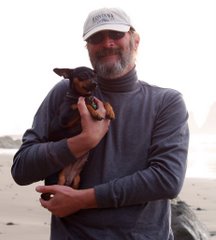
Dr. James D. Kriley
Wildhorse Island, Flathead Lake, Montana
Taken Summer 1995


The first call came yesterday at 9:45 am, the last at 10:04 p.m. In between several calls came from friends and former colleagues all wanting to make sure I had heard the news. Dr. James D. Kriley had died, doing one of the things he loved the best, in one of his favorite spots. We should all be so lucky.

My first memory of Dr. Kriley, or Jim as everyone knew him, was a conversation he had with my boss, Sr. Kathryn Martin, as the three of us walked across the University of Montana campus. Kathy was Dean of Fine Arts, Jim was Chair of the Department of Drama/Dance, and I was the new Administrative Assistant in the Dean’s Office. UM had just hired a new president, one of the seemingly endless series of presidents before George Dennison arrived, and Jim had one simple question. “Does he drink?” He then added the statement that would color my view of him for several years. “I don’t trust someone who doesn’t drink.” As my parents were strict teetotalers, Jim’s expressed opinion was enough to make him suspect in my eyes.

In 1986, Sr. Kathy accepted the position of Dean of Fine Arts at Wayne State University in Detroit. UM began the process of conducting a national search to replace her. The University’s administration appointed Jim as Interim Dean. Remembering both that earlier conversation and the numerous battles that had been fought between our office and the Drama Department, I prepared myself for the worst. Our office secretary quit because she knew she couldn’t work with “that man.”

My situation was complicated by the fact that just a few weeks earlier, my partner, Richard Donovan, became the first person in Missoula County to be diagnosed with AIDS. AIDS was an unknown quantity in western Montana—a disease that “those people” got in the big cities. Richard and I knew our home would be fire-bombed if the word got out. Our doctor, a family friend, urged us to move to Seattle where Richard could get better care. Knowing that Kathy was leaving, and fearing the reaction of the community, I had not told her of the diagnosis. Now I had a new boss, albeit an “interim” one I didn’t completely trust, and a decision to make. How honest could I be with this man?

The situation was taken out of my hands when Richard was hospitalized for the first time at the end of August. For years I had written all the grant proposals submitted out of the Dean’s Office, and a major submission deadline was September first. Jim let me know that my place was at the hospital and that I was not to worry about the grants. Throughout the course of Richard’s illness, Jim continued to remind me that my first priority was to home and family. I assume the office work got done. All my memories of that period center on Richard.

The next Spring, the University offered Jim the Dean’s position. In the same way he had convinced the search committee that he was the right person for the job, he had won my support as well. When Richard died in July, our local newspaper interviewed me for a front page spread. A few people phoned the University demanding that I be fired—“a person like that has no business working on campus.” Jim told them that they didn’t know what they were talking about.

For the next twelve years, Jim and I worked closely. Under his leadership, the School of Fine Arts moved from being the ugly step-child of the University to one of the central units of the school. Our budget, always insecure in the past, firmed and grew, and with increased financial security, the School’s faculty grew in number as well.

To be sure there were battles that Jim did not win. We don’t need to revisit them. The battles he won, in my opinion formed on the inside, saved the School of Fine Arts. Prior to Jim’s tenure as Dean, the School’s history, for at least fifteen years, had been one of attrition and loss. Both the Art and Music Departments had lost a quarter of their faculty. Art lost their colleagues in a single budget cut. Music lost theirs one by one, with the Full Time Equivalent (FTE) faculty being reduced year after year until by the late 1980s, the Department members were shell-shocked, always wondering what head would be axed next. There were even calls for eliminating the Department altogether. With Jim as Dean, the faculty losses stopped.

In an academic field where doctoral degrees are the exception, Jim held an earned doctorate, a PhD, from the University of Washington. While I am not sure of the exact nature of his doctoral work, my memory leads me to believe it had to do with Abraham Maslow’s Hierarchy of Needs.

What I do know is that his own education led Jim to propose a new undertaking for the School of Fine Arts. Traditionally the School saw its mission as training artists, arts educators, and, to a lesser extent, future audiences for those artists. Jim’s proposal, which grew into The Creative Pulse, expanded the School’s teacher education programs to bring back established K-12 teachers and further their education in the arts and education during their summer breaks. In this, Jim usurped the prerogative of Schools of Education. With the Creative Pulse, the School of Fine Arts took on the mission of re-educating the educators.

Dr. James Kriley
Flathead Lake, Montana
Taken Summer, 1995

I could write at length of the successes of this program, of the untold number of grade-school and high school students whose education has been enriched because Jim conceived the Creative Pulse. To be sure, Jim would be the first to admit that the program was a collaborative effort involving faculty from across the School. I am equally sure, however, that had it not been Jim pushing the Pulse, the program would not have happened. In the ten years I was involved in the Pulse, I came to see it as the most important work we were doing in the School.

Often have I said that the one saleable skill I got in grad school was the ability to type. Jim did not learn typing in school. As computers became more and more common on desk tops across campus, Jim kept looking for voice recognition software so that he wouldn’t have to use the keyboard. We tried a variety of unsatisfying programs to no avail. That doesn’t mean that Jim was a Luddite. Far from it. His embrace of new technology led to the development of the Media Arts program at UM. This program grew out of Jim’s conviction that we were failing our students if we trained them only for the traditional performance stage and ignored the reality of a market place increasingly dominated by the likes of George Lucas.

Jim was a story teller and he saw the potential of new media technology in sharing our stories. I remember a conversation he had while giving UM Alumnus Carroll O’Connor a tour of the Media Arts facilities. Carroll was most impressed watching our students in the editing lab. He regretted that he had not had the technology available for All in the Family. Thanks to Jim Kriley’s vision and dedication, future UM alumni won’t share that regret.

Prior to being named Dean of Fine Arts, Jim served as Chair of the Department of Drama and Dance. During his tenure in that position, he took a sabbatical leave and studied in Los Angeles. While in southern California, he also studied sailing. After returning to Missoula, he bought a small sailboat which he kept moored at Flathead Lake. Eventually his skills and desires outgrew the first boat, and he found a 27’ Erickson for sale in Portland, Oregon. Using my pickup, he brought the boat back across the mountains. (I got to tow the empty trailer back to Portland on my next run to California.) The new boat replaced the old at Flathead. For those of you who don’t know Montana topography, Flathead Lake is the largest alpine lake in the US and the largest freshwater lake west of the Great Lakes. It stretches approximately thirty miles north to south and fifteen miles east to west. If you have a sailboat in Flathead Lake, you don’t really need to sail anywhere else.

Jim loved sailing and he loved the Lake. He always had a cabin on the west shore of the Lake, and we had many faculty and administrative retreats at Jim’s cabin. The highlight of any lakeside retreat was a day spent sailing. Usually we’d sail from Big Arm where the boat was moored to Wild Horse Island and back. We’d snack on board, then have a big dinner on shore. Jim was a fine cook as well, and the only person who could fix salmon in a way that I would enjoy eating the fish. We always ate well on our retreats.

Drs. Randy Bolton and James Kriley
Flathead Lake, Montana
Taken Summer, 1995

If Randy Bolton accompanied us, as he usually did, Randy would make gin and tonics in the boat’s cabin as we tacked across the lake. It was on Jim’s boat that I learned to drink g&ts.

Dr. James Kriley was the best boss I have ever had. He was my friend, my colleague, my mentor, my confessor. I’d like to think I served some of those roles for him as well. After my father and John Wesley, he was the most influential male in my life. I will miss him terribly. In Maslow’s hierarchy, the top level is “Self Actualization.” This is represented by morality, creativity, spontaneity, problem solving, lack of prejudice, acceptance of facts. This is the level where Jim Kriley lived. This afternoon, in my own private Irish wake, I intend to lift a large gin and tonic in remembrance. Henceforth every g&t will be a toast to Jim.

My heart goes out to his wife Mary Kay, his daughters Megan, Casey and Colleen, and to all of our mutual friends and colleagues who I know are as bereft at this point as am I.

According to the news report, Jim’s unoccupied boat drifted ashore at 4 pm, Monday, August 18th, 2008. An aerial search of Big Arm Bay enabled searchers to locate his body. As Jim was an excellent swimmer, I have to assume that he had a heart attack and died instantly. He was in a place he loved, doing something he loved. We should all be so lucky.

For the local reaction to this loss, read today’s Missoulian .


There's a tear in your eye,
And I'm wondering why,
For it never should be there at all.
With such pow'r in your smile,
Sure a stone you'd beguile,
So there's never a teardrop should fall.
When your sweet lilting laughter's
Like some fairy song,
And your eyes twinkle bright as can be;
You should laugh all the while
And all other times smile,
And now, smile a smile for me.

When Irish eyes are smiling,
Sure, 'tis like the morn in Spring.
In the lilt of Irish laughter
You can hear the angels sing.
When Irish hearts are happy,
All the world seems bright and gay.
And when Irish eyes are smiling,
Sure, they steal your heart away.

For your smile is a part
Of the love in your heart,
And it makes even sunshine more bright.
Like the linnet's sweet song,
Crooning all the day long,
Comes your laughter and light.
For the springtime of life
Is the sweetest of all
There is ne'er a real care or regret;
And while springtime is ours
Throughout all of youth's hours,
Let us smile each chance we get.

When Irish eyes are smiling,
Sure, 'tis like the morn in Spring.
In the lilt of Irish laughter
You can hear the angels sing.
When Irish hearts are happy,
All the world seems bright and gay.
And when Irish eyes are smiling,
Sure, they steal your heart away.