Wednesday, August 20, 2008

James D. Kriley--A Very Personal Appreciation

When Irish eyes are smiling,
Sure, 'tis like the morn in Spring.
In the lilt of Irish laughter
You can hear the angels sing.
When Irish hearts are happy,
All the world seems bright and gay.
And when Irish eyes are smiling,
Sure, they steal your heart away.

--Chauncey Olcott & George Graff

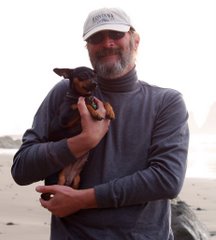
Dr. James D. Kriley
Wildhorse Island, Flathead Lake, Montana
Taken Summer 1995


The first call came yesterday at 9:45 am, the last at 10:04 p.m. In between several calls came from friends and former colleagues all wanting to make sure I had heard the news. Dr. James D. Kriley had died, doing one of the things he loved the best, in one of his favorite spots. We should all be so lucky.

My first memory of Dr. Kriley, or Jim as everyone knew him, was a conversation he had with my boss, Sr. Kathryn Martin, as the three of us walked across the University of Montana campus. Kathy was Dean of Fine Arts, Jim was Chair of the Department of Drama/Dance, and I was the new Administrative Assistant in the Dean’s Office. UM had just hired a new president, one of the seemingly endless series of presidents before George Dennison arrived, and Jim had one simple question. “Does he drink?” He then added the statement that would color my view of him for several years. “I don’t trust someone who doesn’t drink.” As my parents were strict teetotalers, Jim’s expressed opinion was enough to make him suspect in my eyes.

In 1986, Sr. Kathy accepted the position of Dean of Fine Arts at Wayne State University in Detroit. UM began the process of conducting a national search to replace her. The University’s administration appointed Jim as Interim Dean. Remembering both that earlier conversation and the numerous battles that had been fought between our office and the Drama Department, I prepared myself for the worst. Our office secretary quit because she knew she couldn’t work with “that man.”

My situation was complicated by the fact that just a few weeks earlier, my partner, Richard Donovan, became the first person in Missoula County to be diagnosed with AIDS. AIDS was an unknown quantity in western Montana—a disease that “those people” got in the big cities. Richard and I knew our home would be fire-bombed if the word got out. Our doctor, a family friend, urged us to move to Seattle where Richard could get better care. Knowing that Kathy was leaving, and fearing the reaction of the community, I had not told her of the diagnosis. Now I had a new boss, albeit an “interim” one I didn’t completely trust, and a decision to make. How honest could I be with this man?

The situation was taken out of my hands when Richard was hospitalized for the first time at the end of August. For years I had written all the grant proposals submitted out of the Dean’s Office, and a major submission deadline was September first. Jim let me know that my place was at the hospital and that I was not to worry about the grants. Throughout the course of Richard’s illness, Jim continued to remind me that my first priority was to home and family. I assume the office work got done. All my memories of that period center on Richard.

The next Spring, the University offered Jim the Dean’s position. In the same way he had convinced the search committee that he was the right person for the job, he had won my support as well. When Richard died in July, our local newspaper interviewed me for a front page spread. A few people phoned the University demanding that I be fired—“a person like that has no business working on campus.” Jim told them that they didn’t know what they were talking about.

For the next twelve years, Jim and I worked closely. Under his leadership, the School of Fine Arts moved from being the ugly step-child of the University to one of the central units of the school. Our budget, always insecure in the past, firmed and grew, and with increased financial security, the School’s faculty grew in number as well.

To be sure there were battles that Jim did not win. We don’t need to revisit them. The battles he won, in my opinion formed on the inside, saved the School of Fine Arts. Prior to Jim’s tenure as Dean, the School’s history, for at least fifteen years, had been one of attrition and loss. Both the Art and Music Departments had lost a quarter of their faculty. Art lost their colleagues in a single budget cut. Music lost theirs one by one, with the Full Time Equivalent (FTE) faculty being reduced year after year until by the late 1980s, the Department members were shell-shocked, always wondering what head would be axed next. There were even calls for eliminating the Department altogether. With Jim as Dean, the faculty losses stopped.

In an academic field where doctoral degrees are the exception, Jim held an earned doctorate, a PhD, from the University of Washington. While I am not sure of the exact nature of his doctoral work, my memory leads me to believe it had to do with Abraham Maslow’s Hierarchy of Needs.

What I do know is that his own education led Jim to propose a new undertaking for the School of Fine Arts. Traditionally the School saw its mission as training artists, arts educators, and, to a lesser extent, future audiences for those artists. Jim’s proposal, which grew into The Creative Pulse, expanded the School’s teacher education programs to bring back established K-12 teachers and further their education in the arts and education during their summer breaks. In this, Jim usurped the prerogative of Schools of Education. With the Creative Pulse, the School of Fine Arts took on the mission of re-educating the educators.

Dr. James Kriley
Flathead Lake, Montana
Taken Summer, 1995

I could write at length of the successes of this program, of the untold number of grade-school and high school students whose education has been enriched because Jim conceived the Creative Pulse. To be sure, Jim would be the first to admit that the program was a collaborative effort involving faculty from across the School. I am equally sure, however, that had it not been Jim pushing the Pulse, the program would not have happened. In the ten years I was involved in the Pulse, I came to see it as the most important work we were doing in the School.

Often have I said that the one saleable skill I got in grad school was the ability to type. Jim did not learn typing in school. As computers became more and more common on desk tops across campus, Jim kept looking for voice recognition software so that he wouldn’t have to use the keyboard. We tried a variety of unsatisfying programs to no avail. That doesn’t mean that Jim was a Luddite. Far from it. His embrace of new technology led to the development of the Media Arts program at UM. This program grew out of Jim’s conviction that we were failing our students if we trained them only for the traditional performance stage and ignored the reality of a market place increasingly dominated by the likes of George Lucas.

Jim was a story teller and he saw the potential of new media technology in sharing our stories. I remember a conversation he had while giving UM Alumnus Carroll O’Connor a tour of the Media Arts facilities. Carroll was most impressed watching our students in the editing lab. He regretted that he had not had the technology available for All in the Family. Thanks to Jim Kriley’s vision and dedication, future UM alumni won’t share that regret.

Prior to being named Dean of Fine Arts, Jim served as Chair of the Department of Drama and Dance. During his tenure in that position, he took a sabbatical leave and studied in Los Angeles. While in southern California, he also studied sailing. After returning to Missoula, he bought a small sailboat which he kept moored at Flathead Lake. Eventually his skills and desires outgrew the first boat, and he found a 27’ Erickson for sale in Portland, Oregon. Using my pickup, he brought the boat back across the mountains. (I got to tow the empty trailer back to Portland on my next run to California.) The new boat replaced the old at Flathead. For those of you who don’t know Montana topography, Flathead Lake is the largest alpine lake in the US and the largest freshwater lake west of the Great Lakes. It stretches approximately thirty miles north to south and fifteen miles east to west. If you have a sailboat in Flathead Lake, you don’t really need to sail anywhere else.

Jim loved sailing and he loved the Lake. He always had a cabin on the west shore of the Lake, and we had many faculty and administrative retreats at Jim’s cabin. The highlight of any lakeside retreat was a day spent sailing. Usually we’d sail from Big Arm where the boat was moored to Wild Horse Island and back. We’d snack on board, then have a big dinner on shore. Jim was a fine cook as well, and the only person who could fix salmon in a way that I would enjoy eating the fish. We always ate well on our retreats.

Drs. Randy Bolton and James Kriley
Flathead Lake, Montana
Taken Summer, 1995

If Randy Bolton accompanied us, as he usually did, Randy would make gin and tonics in the boat’s cabin as we tacked across the lake. It was on Jim’s boat that I learned to drink g&ts.

Dr. James Kriley was the best boss I have ever had. He was my friend, my colleague, my mentor, my confessor. I’d like to think I served some of those roles for him as well. After my father and John Wesley, he was the most influential male in my life. I will miss him terribly. In Maslow’s hierarchy, the top level is “Self Actualization.” This is represented by morality, creativity, spontaneity, problem solving, lack of prejudice, acceptance of facts. This is the level where Jim Kriley lived. This afternoon, in my own private Irish wake, I intend to lift a large gin and tonic in remembrance. Henceforth every g&t will be a toast to Jim.

My heart goes out to his wife Mary Kay, his daughters Megan, Casey and Colleen, and to all of our mutual friends and colleagues who I know are as bereft at this point as am I.

According to the news report, Jim’s unoccupied boat drifted ashore at 4 pm, Monday, August 18th, 2008. An aerial search of Big Arm Bay enabled searchers to locate his body. As Jim was an excellent swimmer, I have to assume that he had a heart attack and died instantly. He was in a place he loved, doing something he loved. We should all be so lucky.

For the local reaction to this loss, read today’s Missoulian .


There's a tear in your eye,
And I'm wondering why,
For it never should be there at all.
With such pow'r in your smile,
Sure a stone you'd beguile,
So there's never a teardrop should fall.
When your sweet lilting laughter's
Like some fairy song,
And your eyes twinkle bright as can be;
You should laugh all the while
And all other times smile,
And now, smile a smile for me.

When Irish eyes are smiling,
Sure, 'tis like the morn in Spring.
In the lilt of Irish laughter
You can hear the angels sing.
When Irish hearts are happy,
All the world seems bright and gay.
And when Irish eyes are smiling,
Sure, they steal your heart away.

For your smile is a part
Of the love in your heart,
And it makes even sunshine more bright.
Like the linnet's sweet song,
Crooning all the day long,
Comes your laughter and light.
For the springtime of life
Is the sweetest of all
There is ne'er a real care or regret;
And while springtime is ours
Throughout all of youth's hours,
Let us smile each chance we get.

When Irish eyes are smiling,
Sure, 'tis like the morn in Spring.
In the lilt of Irish laughter
You can hear the angels sing.
When Irish hearts are happy,
All the world seems bright and gay.
And when Irish eyes are smiling,
Sure, they steal your heart away.

Friday, August 15, 2008

Meet Me in Montana

The group as of Saturday Morning, August 2nd, 2008
Taken at St. Regis Montana (Fuji disposable camera)
Kevin and I are front row on right behind dogs

Won't you meet me in Montana.
I wanna see the mountains in your eyes.
Woah, woah, I had all of this life I can handle.
Meet me underneath that big Montana sky.

--Dan Seals

A bit of history. In 1982, I rode (a horse, that is) in the Grand Entry of the Reno Gay Rodeo. I made a pair of leather chaps from a dyed red hide I purchased at Tandy, had a friend make me a cowboy shirt with a blue bandana print on the cuffs and yoke, and put it all together with a pair of blue 501s, a Resistol Silver Belly hat and Tony Lama boots. Did I look like a cowboy? Probably not, but I was dressed to the nines and carried the Montana flag proudly. Joan Rivers was the Grand Marshall that year, and I got to be real close to her in her pre-botox days.

By the late 1980s, a group of guys living in the Billings area started the Big Sky Gay Rodeo Association for Montana and northern Wyoming. I joined the group and got their t-shirt. In 1995, a friend and I traveled to Phoenix with the intent of buying a business. The purchase fell through, but my friend and I attended the Phoenix Gay Rodeo and had a ball. That is the sum total of my gay rodeo experience. Until the first weekend of August, 2008, that is.

In 2006, Jeff Taylor and John Tomes opened their Cowboy Up Ranch near St. Regis, Montana, for a weekend of camping, dancing, floating the river and making good friends. The weekend was called “Meet Me In Montana,” and was sponsored by the Pacific Northwest Gay Rodeo Association. Somehow I managed to get on their mailing list and read about the gathering, but as I was in California looking after my mother, I was not able to attend.

The second annual gathering happened in 2007 as I was getting ready to set out on the 6,000 Mile Sunday Drive. Again, circumstances did not allow me to attend, but I was determined to make it to the 2008 weekend.

With that goal in mind, Kevin and our friend Mike spent a Sunday afternoon in late July putting the camper back on the pickup. The camper has been sitting up by the cabin for quite some time. (I unloaded it from the pickup long before I headed to California.) The camper was dirty inside; some of the expected gear was missing, and one jack had lost all its hydraulic fluid and would not support the weight of the 11 foot long beast. While I went into Stevensville to look for hydraulic fluid, Kevin and Mike managed to get the camper off the ground, onto the pickup, and off the mountain. I’m glad I wasn’t there to watch.

There were, of course, other problems with the camper, but Kevin assured me that we could get it fully functional, and by cracky, we did—almost. OK, the air conditioner needs to be recharged, and the heater isn’t working properly, but all the water lines are now good and we can use the sinks, the toilet, and the showers. Yes, it has two showers: one inside and one outside.

Friday, August 1st, we drove west on Interstate 90 heading toward St. Regis and the 2008 Meet Me In Montana gathering. It was a beautiful day to be heading into the country, and all went well until we passed a motor home near Superior. For you history buffs, the very first Gideon Bible was placed in a hotel room in Superior, Montana way back in 1908. One hundred years later, as we were nearing the town, our truck began a bump and grind that had me grabbing the door trying to hold it in place. A roadside inspection showed that all tires were fully inflated, and the tread all looked good, so we weren’t suffering from a flat. Kevin assumed that we had lost the balancing weights from the front passenger side tire, and appeared relatively unconcerned as we drove the final fifteen miles to St Regis at a reduced speed. As for me, well what do I know? Kevin is the one with the CDL and the big rig driving experience. If he wasn’t concerned, why should I be.

Once at the Cowboy Up Ranch, we found a relatively level spot in the area set aside for trucks and trailers. Having claimed our spot, we walked over to the only other vehicle parked in the area—a truck and horse/camper trailer rig from Moscow Idaho. Three men and two women from the Moscow/Pullman area were happily sipping cocktails while their horses were pastured in the next field. We introduced ourselves and settled in with them.

Over the next few hours, more guests arrived, setting up tents on the ranch house lawn. While we expected folk from Washington, Idaho and Montana, we learned just how wide a circle Jeff’s email reached as we gathered at the fire pit for the early evening Meet and Greet. Joe was from northern Louisiana. Kirk from Boston. Carlos from Barcelona—yes the one in Spain. All told there were folk from eleven states, Canada, Spain and Switzerland. Were they all cowboys? Hardly. But it was a great group of men and women.

It became obvious that many of the people present were old friends. I was able to reconnect with some friends of my own—men I hadn’t seen in years. Abe and Dave drove down from Bigfork with their four dogs. Roger came from Missoula. Tim and Bill drove over from Heron. I hadn’t seen any of these men since before I went to California. I was pleased to be able to introduce them to Kevin, and he now has several more friends than before.

In talking with Kirk from Boston, I learned that he was interested in geocaching but had never actually been out hunting for hidden treasure. I had done my homework and I knew that there was one (just one) cache in the St Regis area. There was no way I was going to move the pickup, but since Kirk had a rental car, I asked if he’d be interested in finding the cache. According to my Garmin GPS unit, the cache was just about two miles from the ranch.

On the west side of the town of St Regis, there is a nature trail that winds through a swampy area. As Kirk and I hiked, we came to a dead tree on the ground just off the trail. Kirk informed me that he was not about to put his hands in that mess, and I assured him that the cache was almost certain to be exactly where he was loathe to venture. Sure enough, I was right. We found the cache easily, and I reminded myself once again that I should always carry heavy gloves with me for just such a find. Hey, I’m not all that keen on putting my bare hands and arms into dark, dank places where a cache is likely to be guarded by all manner of creepy crawlies.

The Barn where we danced
Taken at St. Regis, Montana
August 2nd, 2008

Back at the ranch, we dined on excellent chicken enchiladas, then gathered in the barn for an evening of dancing, story telling, and catching up with friends. We began by learning a round dance mixer—the Barn Dance. Some two-stepping, some line dancing, and a waltz or two followed, but most folk stayed on the sidelines chatting with old friends and making new ones. It was sort of like the old junior high school dances where no one actually danced.

I have no idea how late things went on. Kevin and I headed for the camper and our bed long before midnight. Saturday was going to be a full day and we needed our beauty rest.

Saturday morning dawned gray and dreary. We had heard some raindrops on the camper roof during the night, and while the ground was relatively dry, the sky did not bode well for a day spent on the river. Nonetheless, after breakfast some thirty men and women boarded an old school bus for the ride to our put-in point on the Clark Fork.

There are three major rivers that carry water out of Montana. The most famous are the Missouri and the Yellowstone, both of which flow east from Montana into North Dakota and then continue on to the Mississippi and the Gulf of Mexico. The Clark Fork of the Columbia flows west into Idaho. It has the largest volume of the three and there are places between Missoula and the Idaho state line where the river is a raging torrent.

I had signed up for the river float, but I was not sure which stretch we would follow. Accordingly, I left the Nikon in the camper and brought along a disposable water-proof Fuji. There was no way I was going to risk losing my gear to the river rapids. As it turned out, I needn’t have worried. The river we rode that Saturday was remarkably flat.


Pushing the bus off the road
Taken at St. Regis, Montana
August 2nd, 2008 (Fuji Disposable Camera)

Getting to the river turned out to be the biggest adventure of the day. Shortly after our bus left I-90 at the Sloway exit, it began losing power. Less than a mile down the road, our driver/guide pulled the bus over and stopped. A few people got off the bus for a cigarette break, and the owner of the home in front of which we were parked, came out to see if we needed help. Well, actually, we did. We were still two miles from the rafts, and the bus wasn’t going to move another inch. Our knight in shining pickup truck (two points if you recognize that line) loaded us in his truck’s bed and ferried us to the rafts.

Once at the water’s edge, we divided ourselves among three rafts, three inflatable kayaks and a large inner tube. Several of the rafters had water cannons and I have to admit, had the day been bright and sunny, the prospect of getting soaked would have been fun. Instead, I was more worried about hypothermia than heat stroke. August 2nd, and we’re wondering if Summer is over.

To add to our fun, the wind came up, and was blowing from the West. There were places on the river where we had to paddle continuously just to keep the rafts from blowing upstream. We began to wonder if we’d be home in time for supper.

The various misadventures and the uncooperative weather didn’t dampen our spirits however, and as we floated we saw osprey, hawks, a golden eagle, a group of bald eagles, geese, mergansers, and several smaller birds. Had I had the Nikon and a long lens, you’d be seeing these birds as well. Alas the Fuji wasn’t up to the task.

Eventually the St Regis bridges came in sight and we knew we’d be back at the ranch soon. As the bus was still out of commission, Jeff and some of the guests who hadn’t floated the river met us on the bank and drove us home—again in the back of pickup trucks. It was just like being a kid again, getting to ride in the pickup bed.


Camping on the lawn of the Cowboy Up Ranch
Taken at St Regis, Montana
August 2nd, 2008


Saturday’s dinner was steak, after which we adjourned to the barn where we danced the Barn Dance once again. We two-stepped to Marie Osmond singing “Meet Me in Montana,” and the band played on into the night. (Click on the link to see and hear Marie singing.) I watched handsome men moving in sync to “Dizzy,” but try as I might, I couldn’t get the choreography down to dance with them. “Dizzy” is a line-dance that everyone assumes you know, so no one ever teaches it. Once home, I went on-line and found the directions. Next time I’ll be able to dance with those handsome men.

Once again, Kevin and I turned in early. I heard no raindrops over night, and Sunday we awoke to a beautiful, clear blue sky. Jeff served up a scrumptious Sunday brunch, and we said our goodbyes. I can’t speak for anyone else, but I was a happy camper. Kevin and I had a great time and we look forward to next year’s gathering. And yes, we’re going to join the Pacific Northwest Gay Rodeo Association. Ya never know when you’ll need a cowboy around.

By the way, I took along my kite bag, and was able to get five of my stunt kites into the air at one time or another. Here’s a picture of truck, camper and kites as set up on the Cowboy Up Ranch grounds. Oh, and the bumpy ride, it turned out, was caused by the belts in a fairly new Michelin radial which were in the process of separating. We got home and bought a new tire. Problem solved.

Our Home Away from Home
Taken at St. Regis, Montana
August 3rd, 2008

To see all my pictures from the weekend, go to my Picasa on line gallery here.

Thursday, July 24, 2008

Adventures in Moving, Part 2

I've seen fire and I've seen rain
I've seen sunny days that I thought would never end
I've seen lonely times when I could not find a friend
But I always thought that I'd see you again


--James Taylor


Where we turned around
French Hill Road, Del Norte County California
Taken 7/11/08

It will come as no surprise to anyone following the news that Northern California is on fire. 2008 is the worst fire year in recent history, and fires have burned from Big Sur to Mount Shasta. Before we left for California, our friend Norm asked if Mother’s house was in danger. I replied “no,” explaining that the coastal fires were further south and the northern fires were inland. That’s before we got to the Golden State and found ourselves stopped by a wildfire blocking the highway twenty some miles from home.

Mind you, that’s twenty miles by highway. If you care to fly with an old crow, the distance is much shorter between Gasquet and Smith River. A distance that is covered with lots of fuel to feed wildfires borne on the wind.

Friday evening, knowing we had only a few miles left to go, Kevin pulled out his Missoula Rural Fire ID card and we tried to talk our way past the barricades. This worked at first, but when we came to a line guarded by a California Highway Patrolman, we got no further. We were told that if we knew the back way, we could probably take the southern route over French Hill. Just don’t try the northern route, as that was probably in the line of the fire.

The northern route would have led us directly to Smith River (well, as directly as a mountain logging road can be), but as that was out, we tried French Hill. Now I’ve been all over these mountains, and have driven many of the back roads, but I’d never been on French Hill. There’s a first time for everything, isn’t there!

In one of the area’s great boondoggles, a road was constructed between Gasquet on US 199 and Orleans on California 96. This road has always been known as the GO Road for its two termini (Gasquet and Orleans). Construction of the road caused quite a bit of consternation amongst Native American and environmental circles, and a court battle ensued. Road construction continued while the courts deliberated, but finally a decision was handed down ending the road building. Today there is a northern end to the GO Road and a southern end, but there is also a seven-mile gap between the two. I can’t speak about the southern end—I’ve never been on it—but the northern end is a paved, two-lane highway that winds over twenty-five miles into the Siskiyou Mountains before it stops abruptly. To read more about the court cases, check out these sites: http://www.sacredland.org/historical_sites_pages/go_road.html and http://www.calindian.org/nl_fall2002.5.htm A more lengthy discussion of the issues can be found at http://www.humboldt.edu/~jae1/emenLyng.html

The GO Road doesn’t actually start at Gasquet, but rather branches off the South Fork Road which follows, appropriately enough, the South Fork of the Smith River. As we were driving up French Hill, I wondered if this had been the original starting section of the infamous unfinished highway. We found ourselves all alone driving up a dirt logging road, without a clear idea where we were headed.

After about five miles, we met a vehicle heading down the mountain. The driver told us we were still on the right road (a road designated with the number 411). He suggested that if we continued on for another five miles, we would come to a T and if we then turned right, we would be on road 405. This road would take us down to the South Fork Road.

Well, the five miles turned into 9, but eventually we found ourselves at a T. Turning right we continued climbing until we came to the wide spot pictured above. At this point Kevin became quite concerned that we did not have enough fuel to get us off the mountain—whether we continued on or turned back. Even with the trailer empty, pulling it caused the Expedition’s miles per gallon to drop precipitously. Driving in low gear on a mountain dirt road used even more fuel.

Since we really had no idea how much further into the wilds we would have to drive, we turned back. From this location, looking south, we were able to spot the smoke plume from the Blue 2 fire in southern Del Norte County. This lightning caused fire started on June 20th and as of yesterday (7/23/08) was only 25% contained. For the fire incident report and a current update, go to http://165.221.39.44/incident/1422/


The Blue 2 Fire
http://165.221.39.44/incident/1422/
Del Norte County, California
Taken 7/11/08


Traveling on a wing and a prayer, as it were, we got down the mountain and back to our friends’ home in Gasquet. Verizon has good cell service in the area, and I had called a Crescent City friend, Mike, to let someone know where we were in case we didn’t make it out of the hills. Mike had offered to bring us gas (as none was available in Gasquet), but just as we couldn’t get past the barricades, he would not have been able to either. Nor could I tell him just how to negotiate the back roads to bypass the fire lines.

As it turns out, our friends in Gasquet are farmers. They grow California’s number one cash crop. Too bad it isn’t legal. I won’t go into a discourse on drug use and abuse, but as a person who hates to take Advil, and won’t use illicit drugs, I have to say I find it extremely hypocritical of the US Government to name, by act of Congress, Bourbon as the national drink of the US while at the same time demonizing marijuana, its growers and users. (For more on Bourbon see National Bourbon Month )

Since our friends are operating outside the law, I will not use their real names. Let’s call them David and Doug. D&D had a friend stuck in Crescent City whom they needed to fetch. David was going to take Doug’s car and travel the back road. I volunteered to accompany him on the drive, provided he didn’t mind stopping in Crescent City to pick up Mike’s gas cans. He readily agreed as he was not looking forward to making the trip alone.

We headed out, once again driving up French Hill. We drove fourteen miles on road 411, then turned right onto road 405. All of this was now familiar to me. But we continued on 405 for an additional fourteen miles before reaching South Fork Road. At that point we were back on pavement, but over ten miles from US 199. Kevin and I would never have made it in the Expedition.


The view from Gasquet Airport
Gasquet, California
Taken 7/11/08

Once in Crescent City, we picked up Mike’s gas cans, picked up D&D’s friend who had been camped out in the Safeway parking lot for the past four hours, grabbed a quick bite at McDonald’s, filled the gas cans ($50 to fill three gas cans at $4.79/gallon), and headed back toward Gasquet. US 199 was still closed, so we turned off onto South Fork Road, then 405, finally 411, getting back to Gasquet five hours after we left. That’s right. It took us five hours to travel thirty miles.

Now here’s where it gets surreal. Fasten your seat belts and hold on. I don’t want to get anyone in trouble. Understand that David smokes (tobacco) and Doug doesn’t. David was driving Doug’s car. Doug wasn’t along. All the while talking about how a careless smoker probably was responsible for the fire blocking 199, David was smoking, and holding the cigarette out the window, because Doug doesn’t want him to smoke in the car. OK. I can deal with that. On the way back, middle of the night, the bong comes out. So now we have a cigarette going, a bong being lit repeatedly, and gas fumes filling the car from the three gas cans in the back of the compact SUV. I kept up my Navajo mantra. “Today is a good day to die.”

The subject of marijuana economics came up. The expressed opinion of those in the know—two-thirds of those in the car—was that the fires were going to make a major impact on the availability of the merchandise. Much of California’s crop is grown outdoors in the forests. With the forests going up in smoke, so was the crop.

As an outsider, I asked what would happen should marijuana be legalized. The immediate answer was that Phillip Morris would take over the market, simultaneously providing an inferior product and putting the little guys out of business. There would, however, always be a market for quality goods. Ah, isn’t it always the case.

Back at the ranch, sleep was difficult. Between the strange bed, the fact that our two dogs were sharing a house with two other dogs, and the ever present worry about the nearby fire, this light sleeper tossed and turned—a lot. When Kevin woke me around 7:30, it felt as if I had just fallen deeply asleep.

Kevin said he’d heard traffic on the highway, and he figured the road was open. He was concerned that it would reclose, so we had to leave now. He’d already emptied the gas cans into the tank.


Yes it's one-lane and paved
Josephine County, Oregon
Taken 7/12/08

Out on the highway traffic was moving—right up to the barricades. Still no word on when the road might be opened. The problem was no longer the smoke that closed the road the night before. Now we had rocks and trees, loosened by the fire, falling across the road.

We made a U-turn, and headed back to Oregon. Filling the tank and our bellies in Cave Junction, we cut across to Merlin and the Rogue River, then followed the road across the mountains to Gold Beach. This is a one-lane logging road that has been paved. Don’t ask me why anyone would bother to pave a logging road. Plenty of other people had the same idea and we were constantly meeting traffic as we crossed the mountains.

Dropping down into Gold Beach, we hit US 101 and drove the final 40 miles to Smith River, arriving around 1:30. Our trip from Gasquet to Smith River, normally a half-hour drive, took six hours.

Emptying the house revealed that the walls would need to be painted if there was any hope of selling the place. While Kevin loaded the trailer, I painted the three bedrooms. Wednesday afternoon, we locked the doors and headed out. US 199 was finally open, with fire crews mopping up the remains of the fire.


"Just Married," "Out and Proud," Kalispell car dealer
What's not to love
Taken 7/16/08 in Portland, Oregon

We drove through to Portland where we spent the night. A car in the motel’s parking lot had “Just Married” painted on the back window. How nice, I thought. Then I saw the rainbow bumper sticker proclaiming “Out and Proud.” HOW NICE! I said again. Now that the California Supreme Court has ruled that gay people are entitled to the same rights and responsibilities as heterosexuals, people from all over are heading to the chapel of love. Let’s all work together to keep the forces of hatred and ignorance from taking this away from us.

Wednesday, July 23, 2008

Adventures in Moving, Part I

And there's fire on the mountain, lightnin' in the air
Gold in them hills and it's waitin' for me there
Fire on the mountain, lightnin' in the air
Gold in them hills and it's waitin' for me there
Waitin' for me there

--Marshall Tucker Band

The Clark Fork at 9 Mile
Missoula County, Montana
Taken 7/10/08

It’s been a while since I’ve written anything, and you all can be excused for thinking that I dropped off the face of the earth. The fact is that I’ve been preoccupied with trying to empty and sell the house in California. Hence the title of this post, Adventures in Moving.

I’ve now made two trips to California in the past three weeks and frankly, I’m tired. I put the house on the market back in April (or maybe it was March), and on May 22nd I signed papers agreeing to sell the house for considerably less than I had originally hoped. I had two conditions on accepting such a low-ball offer: 1) the house would be sold “as is” with me not making any further improvements on the property; and 2) the deal had to close ASAP, but no later than 30 days after the buy-sell agreement was signed. The buyer agreed to both conditions.

Now understand, I have never sold a piece of real estate before. Those of you who know me well will probably agree that I’ve never sold anything. Period. But I’ve always been a good student, and I read the documents before signing them. They mentioned certain things that I had to have done within seven days. It should have been my first warning when my realtor told me to not worry about the deadline.

After several calls to my realtor, I received, via fax, a set of documents I had to fill out, sign and fax back. These included such things as verifying that the house had a smoke detector, and that there were no problems with the neighbors. Things like that.

I got the forms back to California before my deadline and waited for the buyer to get all their financing in place. This was complicated by the fact that the buyer spoke no English and everything had to be translated into Spanish. You’d think that in California all this boilerplate documentation would be available in Spanish, but apparently that’s not the case.

Around the middle of June, I called the realtor to ensure that the deal would close on Monday, June 23rd. Despite the signed agreement, the realtor seemed surprised that I would expect such a thing to happen. It was going to take at least two more weeks, she informed me. Thinking positively, I headed down to California with the intent of renting a U-Haul truck and emptying the house.

Kevin and I spent a week in California, meeting with the folk at the Title Company, and getting everything ready at my end. As it turns out, a U-Haul 17 foot truck isn’t really 17 feet long, and we filled the truck without emptying the house. Oh well, it was just a matter of a few days and the deal would close. Kevin and I left the house with stuff piled in almost every room and returned to Montana.

Once back in Montana I kept in touch with the title folk, asking for a firm date for closing. It seems the lender had all the funds in hand, but wanted those funds to “season,” whatever that means. After a week of daily talks with the title company, I was told that the loan documents would be ready by Monday, July 7th. On that Monday, I received a call from my realtor saying that she feared the buyer was getting “cold feet.”

The realtor met with the buyers Monday evening, and called me late that night to say that everything was fine, and that they would be requesting the lending documents on Tuesday. Wednesday, July 9th, she called to tell me that the buyer had backed out completely. She wanted to start showing the house again, but we had left it unshowable.

Panic.

I had been counting on the house sale closing to catch up on paying some bills—including the Missoula mortgage—and was not sure just what I was going to do next. Fortunately, I had a CD that I could turn in prematurely, which is what I did. That allowed me to buy a 16’ cargo trailer and catch up on some bills. It gave me some breathing room, but did not solve the financial crisis I was facing.

In another post I’ll write about the joys of trying to deposit a cashier’s check. Suffice it to say that Kevin and I spent a full day driving from bank to bank, trying to get the money into a working account.


Thursday, July 10th, around 4:30 in the afternoon, Kevin and I pulled out of Missoula driving his Ford Expedition and pulling the new trailer. California here we come!

Looking West from Coeur d'Alene, Idaho
Taken 7/10/08, 5:30 p.m.


As we neared Coeur d’Alene, Idaho, the oldies Spokane radio station Kevin likes started telling us what we were seeing on the left side of our screen. Seeing? We were listening to the radio. Eventually it dawned on me that we were listening to a television live broadcast. Perhaps the fact that we were no longer hearing any music tipped me off.

The plume of smoke was visible as we climbed the hill on the east side of Coeur d’Alene, and the reports of the fire in suburban Spokane become more and more alarming. In the twenty minutes or so it took us to cross the Spokane valley, the estimates of the fire’s size jumped from 500 acres to 1200 acres to 1500 acres. A mandatory evacuation order was in place for a good bit of the Dishman hills area of Spokane.

Spokane's Burning
(Taken from a moving car)
7/10/08

We also heard about the 40 or so wildfires in the Colville Washington area which had closed portions of US 395. Colville is north of Spokane, and we were heading south on 395, so I wasn’t overly worried, but still. As we drove south of Ritzville on 395, the sunset was spectacular due largely to wildfires burning in the Wenatchee Washington area.

Sunset on the Prairie
Ritzville, Washington
Taken 7/10/08

If you think that high gas prices have cut down on travel, I suggest you try finding a motel room some evening without a reservation. The EconoLodge where I normally stay in Kennewick had no rooms and the desk clerk assured me that there were no rooms anywhere in town. This on a Thursday evening.

While I dozed in the passenger seat, Kevin drove us through to The Dalles, Oregon, where we got the last room at Motel 6. Yes they left the light on for us, but they put up a “Sorry, No Vacancy” sign after I checked in. When I asked why the place was filled, the desk clerk told me “It’s summer.”

Hollyhock
The Dalles, Oregon
Taken 7/11/08

Well, The Dalles is about three hours closer to California than Kennewick, so Friday morning found us back on the road taking the most direct route to Smith River. While we debated crossing over to the coast on Oregon 42, in the end we decided to stay on the Interstate as far as Grants Pass then cross the Siskiyou Mountains on US 199.

Some governmental agency has put up a sign at Cave Junction, Oregon, warning you that when the lights flash, US 199 is closed in California. The lights weren’t flashing, so we proceeded full steam ahead knowing that we were only two hours from “home.” As we crossed the California state line, a reader board at the “bug station” warned us that 199 was closed due to a wildfire at Gasquet.

Well, the two signs weren’t in agreement, and as Gasquet is only twenty miles from Smith River, we decided to proceed. Any other option would have entailed turning around to retrace our route for two hours to catch Oregon 42.

Once in Gasquet, we stopped briefly to visit friends, then tried to talk our way past the guys guarding the barricades. It didn’t work, and I’ll tell you more about our wild ride through the back country tomorrow. In the end, we drove back to our friends’ place and spent the night in their guest room.

To Be Continued.

Sunday, January 27, 2008

The Enemy is Ignorance

Everyone who knows me knows that I read. Voraciously. Given my druthers, I’d spend my time reading over doing almost anything else. When Gary and I packed for a month-long trip to Turkey back in 2000, the hardest question to answer was “How will we pack enough books to last the month?” The answer turned out to be visiting the Montana Valley Bookstore in Alberton, Montana, and filling a suitcase with inexpensive used paperbacks—books we could read then leave in the various hotel rooms we visited from Istanbul to Nevşehir, This worked well as we were able to refill the emptying suitcase with souvenirs of our travels.

In December, one of my readers asked if I was reading a book a day, and I replied that normally I do just that. January, however, has brought shortened reading (and writing) time as I have worked to get a new business off the ground. (Of which more later.) One of the books I have read this month may well be one of the most important books I’ve ever read.

Three Cups of Tea: One Man’s Mission to Promote Peace … One School at a Time
tells the story of how Greg Mortenson and his mountain-climbing friends came to be the main non-Saudi builder of schools in northern Pakistan. Non-Saudi, you say? In Pakistan? Yes, indeed, and now in Afghanistan as well.

Education is something that most Americans take for granted. We may not like our public school systems, but few Americans would accept having no schools in our towns. That absence, however, is the norm in vast areas around the world, especially in what we euphemistically refer to as the developing countries. Pakistan is one such country.

In September, 1993, Greg Mortenson almost lost his life. Working with a team trying to climb K2 in the far north of Pakistan, Mortenson got separated from his fellow climbers, took a wrong turn coming down the glacier at the foot of the mountain, and ended up spending the night alone without any of the gear being carried by his porter. Becoming aware of his mistake, he retraced his steps and eventually found the main trail (and his porter) the next day, but later on, once more took a wrong turn—this time ending up in the wrong village.

The Bible teaches that he who will save his life must first lose it. (Mark 8:35) This is certainly the case of Greg Mortenson. A dedicated mountain-climber, living frugally in Berkeley, California, saving every possible cent for the next climb, Mortenson’s inadvertent side-trip to the village of Korphe changed his life forever. Recovering from his ordeal on K2 and the Baltoro Glacier, Mortenson watched children so eager for knowledge that they crouched outside in the snow and wind, scratching exercises in the dirt. They had no school building, and no full-time teacher. Government educational funds didn’t make it this far from Islamabad, the nation’s capitol. Mortenson vowed to repay the people who had nursed him back to health by building a school. He had no idea what he was getting into.

Three Cups of Tea tells Mortenson’s story from that failed attempt on K2 to meeting with a tribal leader in northern Afghanistan while the US was trying to drive the Taliban out of the country. It tells of the fifty-five schools Mortenson and his Central Asia Institute have built in the two countries, and it details some (surely not all) of the challenges he has faced in doing so. The book is as gripping as any thriller on the shelves. I laughed, I cried, I held my breath wondering just how Mortenson was going to escape the Taliban, or would he be able to leave Pakistan in the aftermath of September 11th.

One of the book’s chapters is titled, “The Enemy is Ignorance.” Much the same as Lederer and Burdick’s hero, The Ugly American, Mortenson has proven that one person can make a difference. At this point, his only competition in the school-building game is the Wahhabi sect of Saudi Arabia—the same folk who gave us Osama bin Laden and the Taliban. Saudi money, which is to say the money you have paid to fill the tanks in your pickups and SUVs, is building schools that teach religious intolerance and hatred for America. These schools, known as Madrassas, accept only boys—boys who too often learn to strap bombs to their bodies and die in the holy war against western values. Mortenson’s schools are co-educational, and no one who has been involved in the building of these schools hates America.

One of Mortenson’s benefactors, the late Jean Hörni, helped Mortenson set up the Central Asia Institute in Bozeman, Montana. Having read Three Cups of Tea, I have added that foundation to my list of most favored charities. You can learn more about the Institute by going to the website www.threecupsoftea.com Instead of buying the book through my Amazon portal, buy it through theirs. Of course, anything else you want from Amazon.com, you can buy through my portals.

In The Lexus and the Olive Tree, Thomas Friedman spoke of how we are moving into an era where “super-empowered individuals” can and do play roles as important as any super-power or super-market. In the first chapter of his book on globalization, he writes:

The third balance that you have to pay attention to in the globalization system -- the one that is really the newest of all is the balance between individuals and nation-states. Because globalization has brought down many of the walls that limited the movement and reach of people, and because it has simultaneously wired the world into networks, it gives more power to individuals to influence both markets and nation-states than at any time in history. So you have today not only a superpower, not only Supermarkets, but, as I will also demonstrate later in the book, you have Super-empowered individuals. Some of these Super-empowered individuals are quite angry, some of them quite wonderful -- but all of them are now able to act directly on the world stage without the traditional mediation of governments, corporations or any other public or private institutions.

Friedman’s prime example of a “super-empowered individual” is Osama bin Laden. I would maintain that Greg Mortenson is another example. In today’s New York Times (Sunday, January 27, 2008) Nicholas Kristof’s op-ed piece, The Age of Ambition, talks of how young people are working to make the world a better place. He calls these “social entrepreneurs,” and mentions Andrew Klaber who started Orphans Against AIDS. He also mentions Jennifer Staple, founder of Unite for Sight, and Soraya Salti who is teaching entrepreneurship through her organization, Injaz, in her native Jordan and eleven other Arab countries. Ms. Salti’s programs are designed for women as well as men. Kristof says “My hunch is that Ms. Salti will contribute more to stability and peace in the Middle East than any number of tanks in Iraq, U.N. resolutions or summit meetings.”

Reading Three Cups of Tea gave me hope. We may still be able to bring peace on earth … one school at a time. And just so you know, When you are doing business in Central Asia, you will be expected to drink tea. With the first cup, you are a stranger. With the second, you become a friend; and with the third, a member of the family.


P.S. If you should go to the movies to see Juno (personally I think I’ll wait for Netflix to bring it to me), pay special attention to the actor playing Juno’s father, Mac MacGuff. One of the few Hollywood celebrities I can claim to know personally, J.K. Simmons is one terrific actor. While most of my friends probably know him best as Schillinger, the neo-nazi leader in the HBO series OZ, Kim (as I know him) stays in my mind as the best El Gallo I’ve seen (and I’ve seen some fifteen different productions of The Fantasticks). He was also terrific as the overbearing Carl-Magnus in the Bigfork (MT) Summer Theatre’s production of A Little Night Music. J.K. Simmons is the son of Donald Simmons, retired Assistant Dean of Fine Arts and Chair of the Music Department at The University of Montana, and Pat Simmons, former head of the Missoula Downtown Association.

Thursday, December 27, 2007

The Latest Noël

On August 10th, 1999, Buford O’Neal Furrow shot a Filipino-American postal worker named Joseph Ileto having just driven from the North Valley Jewish Community Center in Los Angeles where he shot and injured three pre-teen children, a teen-aged counselor, and a sixty-plus year old receptionist. The attacks, prosecuted as a Hate Crime, made national (and probably international) news and Furrow is now serving two life sentences without possibility of parole in the United States Penitentiary in Marion, Illinois, the prison built to replace Alcatraz. Other USP-Marion inmates have included John Gotti, Pete Rose, and Leonard Peltier. For a while, the USP at Marion was one of two Super-max prisons in the US system, similar to Pelican Bay State Prison five miles down the road from where I’m typing this blog. In 2006, the prison at Marion was down-graded to a Medium Security Facility.

Why this interest in a nine-year old hate crime? I just finished reading the second novel of Noël Alumit, Talking to the Moon, which is loosely based on the incident. In the actual event, Joseph “JoJo” Ileto was shot nine times and left to die in a driveway in the San Fernando Valley. When the authorities arrived, Ileto was already dead. Surviving family members included his mother and three siblings. Joseph “Jory” Lalaban, the postal worker gunned down in Alumit’s novel, is an orphan raised in a Roman Catholic orphanage in the Philippines, who leaves the orphanage, gives himself a last name based on the first names of four boys buried in the orphanage’s cemetery, and marries the daughter of the highest grande-dame in the area after impregnating the daughter while serving as a novice priest. Fictional postal worker Jory Lalaban does not die in the driveway, but is taken by ambulance to a Los Angeles hospital where he lingers for months while his wife Belen, second son Emerson, and eventually the second son’s lover Michael all visit.

The title of the book comes from the religion that Jory adopts after leaving Roman Catholicism behind. The Igorot people, an indigenous group of Luzon Island, practiced a religion that included speaking to the moon—especially on the winter solstice when the moon is most powerful. Jory lives among the Igorot, learns the Ibaloi language spoken by his wife, and becomes a healer in the Igorot tradition. Cursed by his mother-in-law, Jory takes his wife to California where their sons, Jun-Jun (Joseph Junior) and Emerson, are born.

It’s easy to say that this is a novel of loss and redemption. Certainly there is much lost in the course of the story. The novel opens in October, 1999, with Jory finding himself looking down the barrel of a gun while delivering mail on his route. He’s shot, taken to the hospital, and the story proceeds in a series of flash-backs told from the point of view of each of the four main characters. While Jory is in a coma in the hospital, we learn of his early life in the orphanage, about the beautiful teen-aged girl who becomes enamored of the young priest-in-training at her parish, of the indomitable Ermaline Dubabang, the girl’s mother who has quite specific ideas about who her daughter will marry and how she will take her place in the highest echelons of Philippine society. Let us acknowledge right away that having a daughter pregnant by a novice priest does not figure in Ermaline’s plans.

We learn too of the death of the first child, Jun-Jun, killed by a hit-and-run driver in a Mercury Comet, and the subsequent estrangement of Belen and Emerson. We also learn how Emerson cannot appreciate his own strength and beauty and because of his own fears, he drives his lover Michael away.

Jory and Emerson talk to the moon. Belen talks to the Virgin Mary. Michael, a flight attendant, talks to his fellow Taiwan Airlines crew members. There’s a lot of talking in this novel—but we note that the talking is rarely conversation. It’s more like prayer, and the underlying question throughout the book is which prayers will be answered.

I learned a lot about the Philippines by reading this book. I recommend it highly and plan on reading Alumit’s first novel, Letters to Montgomery Clift, in which the central character is sent from the Philippines at age 8 to live with his aunt in California. Alumit is certainly a writer to watch. I expect much more from him and look forward to deepening my knowledge of both the Philippines and Noël Alumit. Alumit has his own blog at http://thelastnoel.blogspot.com


Below are the links to Amazon.com should you wish to purchase either of Alumit's novels. (If you do buy a book using this link, Amazon gives me a cut--hint, hint.)


Monday, December 24, 2007

You Should, You Really Should

Chrismas Eve on Pelican Bay
Taken 12/24/07 at Smith River, California


I’m in love with Lev Raphael. There, I’ve said it. If you don’t know who he is, you should. And I’m not just saying that because he actually sent me a thank you note. Raphael is the leading gay, Jewish author in America today. I say that unequivocally. If you haven’t read his work, you should. Take my word for it.

Dancing on Tisha B’Av, published in 1990, is a collection of short stories where the central characters are Jewish, children of Holocaust survivors, and, in many instances, gay. I read the book shortly after it first came out and have reread it, or selected stories from the collection, several times since. Once in an on-line discussion group, someone raised the question of being Jewish and gay, and I suggested that he get a copy and read Dancing on Tisha B’Av. It wasn’t long after that my campus mail had a lovely note from the author thanking me for recommending his work.

In January 1997, Raphael published the first of his Nick Hoffman mysteries, Let’s Get Criminal. Because I’m a sucker for mysteries written with a sense of humor, and since I already knew I liked Raphael’s writing, I picked up a copy the first time I saw it. It was an easy read, and very enjoyable. (Note that when I would go to the library as a youngster, Mother would always ask me to bring her back something “light and frivolous.” There are a lot of tensions in our world, and I must say that I have found that “light and frivolous” is often a good way to go.) The Edith Wharton Murders (August 1997) followed Let’s Get Criminal as the second Nick Hoffman mystery, and by that time, I was hooked. I know I’m not alone. Marilyn Stasio, writing in the New York Times Book Review, gave the second book “a flat out rave” according to Raphael. Whenever I’m in Portland, I head to the gay mystery section at Powell’s City of Books to see what new material is out. I’m always pleased to find a new Nick Hoffman book.

This September, as I was beginning the 6,000 Mile Sunday Drive, I stopped at Powell’s to pick up some road reading. I found the seventh and most recent Nick Hoffman mystery, Hot Rocks, and quickly added it to my pile. Now please understand, I read mysteries for the fun of it, not to try to figure out “who dun it.” I am drawn to formulaic mystery series such as the Sneaky Pie Brown books, or Diane Mott Davidson’s cookbook mysteries. I can’t say I wouldn’t enjoy a more serious tone, but if the author has a sense of humor that shines through all the murder, I eat the book up. With the Nick Hoffman series, I’m happy to say that Raphael’s humor is fully on. What’s even better, from my perspective, is that Nick Hoffman is a faculty member at Michigan State University, and University politics play a major role in the intrigue. Now maybe I spent too many years in academia, but I’m convinced that academic politics are about the dirtiest in the world, second only to church politics. Nick Hoffman is also gay, Jewish, and living with his tenured faculty member partner, Stefan Borowski. What’s not to like? I would love to have his life—without all the dead bodies, of course.

Whaddya Mean the Hibiscus Isn't a Christmas Plant?
Taken 12/24/07 in Smith River, California

Lev Raphael writes more than just fun mysteries. His novels include Winter Eyes and The German Money. Himself the child of Holocaust survivors, Raphael’s work is usually tied, one way or another, to that seminal event, and often to the secrets and lies that people used to surround and protect themselves. Understand that my own academic background centered on the Fascist movement and National Socialism as it played out in French literature of the mid twentieth century. Secrets and lies are a major force—both for the victims and for the perpetrators. Raphael is an expert at exposing the game for what it is. I highly recommend both Winter Eyes and The German Money—the latter of which was the first of Raphael’s books to be translated into German.

Just last week I ordered (and received) Raphael’s book of memoirs, Writing a Jewish Life. This collection of thirteen essays covers such topics as Raphael’s childhood, purchasing a home in suburban Lansing Michigan with his partner, travels to Israel, book tours, and the unfailing love of a good dog. Reading it last night, I was again struck by just how compelling an author Raphael is. Speaking as a gentile, I can say that Writing a Jewish Life has something in it for all of us. All of us who care about the truth, about good writing, about what makes an author tick. This is an honest and forthright exploration into the mind of a man who has learned how to be authentic.

I must admit that I have not read any of the books Raphael has co-authored with his partner. These books, Stick Up For Yourself!, Dynamics of Power, and Coming Out of Shame have achieved a good bit of critical acclaim and one of these days I will pick them up. But the fiction lover in me is drawn to his works of imagination, of which I have two books yet to read.

There are few writers who grab my attention and keep me with them throughout their oeuvre. Yves Navarre was one. Navarre once told a reporter that every time he published a new book, 20,000 people would buy it. I was one of those 20,000. I pick up and read everything I see by Joanne Harris, Arturo Pérez-Reverte, and Rita Mae Brown. Currently I’m in the midst of reading all of the works of Orhan Pamuk and I will be writing a critical essay on that Turkish Nobel Prize winner’s novels. I’m happy to say that Lev Raphael is part of my personal canon. Besides, as I said at the beginning, I’m in love with him.

You've never seen the Christmas Octopus?
Taken 12/6/2006 in Brookings, Oregon

The Nick Hoffman mysteries don’t have to be read in order, although later books in the series do refer to events recounted in the earlier novels. Should you be interested in checking out Raphael’s work, and you really should, below are some links to Amazon.com where you can order any of the books you want.