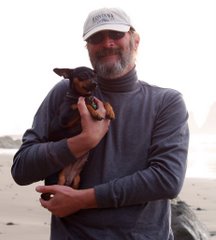
Monday, May 2, 2011

Look to the Rainbow

Look, look, look to the rainbow.
Follow it over the hill and the stream.
Look, look, look to the rainbow.
Follow the fellow who follows a dream.

--Songwriters: Burton Lane & E.Y. Harburg
Click here to hear Petula Clark sing "Look to the Rainbow." (Petula Clark played the role of Sharon McLonergan in the 1968 film version of "Finian's Rainbow," along with Fred Astaire as her father and Tommy Steele as Og the Leprechaun. You can read about the movie on the imdb web site.

The year 2011 has not been a kind one in many ways, and I've pretty much kept silent through the first third of the year. I hope that is at an end, now, and I'll try to explain just why I've been so down.

It started with my eyes. I was going blind due to cataracts in both eyes. We tend to take our eyes for granted, even when we watch someone else, someone near and dear to us lose their own eyesight. My mother, who loved to read and who knitted, crocheted and did very intricate needlework, developed glaucoma and macular degeneration. My dear friend Don, the first boy I ever had a crush on, has a hereditary disease that causes the males in his family to develop macular degeneration at an early age. I, myself, have worn glasses since I was in fifth grade, but somehow I thought I was exempt from further eye problems. Ahh, but it was not to be.

I first noticed problems this past fall. Even though I was wearing a prescription that was just a year old, my vision had become imprecise, to say the least. By winter, I was having trouble seeing when driving at night. On-coming headlights blinded me. I stopped driving at night, which also forced me to stop singing with the Missoula Gay Men's Chorus as I was afraid to try to get across Missoula in the dark, and I was beginning to have trouble reading the music.

At last I broke down and set up an appointment with my optometrist. I wasn't going crazy, but I was going blind. I had cataracts in both eyes, and I'd need to have them surgically removed. We set a date for me to meet with the surgeon, the doctor my optometrist told me he'd use if he had the need. Meanwhile, reading was becoming difficult as was working on my computer. As for photography, well I just about gave it up. I was having to rely on my camera as I couldn't tell through the viewer what was and was not in focus. Loading the pictures onto the computer and blowing them up didn't help, as I still couldn't bring things into a sharp focus. I gave up on writing for the same reason. No sharp focus, except the constant fear of complete blindness.


Me at 15.
Taken July, 1965 on Waikiki, Honolulu, Hawai'i

Then the Montana Legislature opened its ninety-day session, and it quickly became apparent that one of their main foci was going to be the repeal of Montana's Medical Marijuana law. Never before had the Legislature overthrown a voter-approved initiative. As the session wore on, it became apparent that we were dealing with a group of people who fit the old saw, "My mind is made up, don't confuse me with facts." My own personal facts included the large number of people I had come to love who were able to live their lives more fully through the powers of this illicit herb. And I have to admit that repeal of the law would most likely cause me to face bankruptcy and the loss of property that has been in my family for almost sixty years.

As the Legislature became more and more obsessed with repeal (there were several reform bills presented, some of which I could have easily supported), the reform bills were tabled or ignored, and repeal was the only thing the Republicans would consider. When they finally pushed through the repeal bill, the governor vetoed it along with many other bills the governor described as "bat-shit crazy." In a last minute action, the Senate wrote a "reform" bill and pushed it through, having to set aside their own rules to get the bill passed. The House then had to set aside their rules to accept the bill, and proceeded to make a bad bill even worse. I won't go into all the intricacies of the bill. The original version was forty-nine pages long. The stated purpose was to reduce the number of medical marijuana cards in Montana from the present number of approximately 30,000 to a mere 2,000. No one knows what inspired that figure. The long and short is that anyone who had a card for "Chronic Pain" would lose the card on July 1st. All stores would have to close by July 1st. Patients who still had a card after that date could grow their own, or have someone else grow for them, as long as the grower gave them the product and didn't charge for it. And a grower could only grow for three people at a maximum. Kevin and I have over three-hundred patients we provide for. This law puts us out of business.

I'd go to work in the morning, and face the fear and anger of our patients. That in turn would get me upset, raising both my blood pressure and my blood sugar levels. By the fall of 2009, I had succeeded in getting my glucose levels down from a high of 350 to almost normal levels. My doctor was quite pleased. Now, my monitor showed that I was back up into the 300s. I stopped using my monitor. It just added to my tension. I also stopped going to work.

The Legislature adjourned April 28th. The Montana Legislature meets for a maximum of 90 days EVERY OTHER YEAR. Unless a special session is called, they will not meet again until 2013. In their final days, they handed the governor Senate Bill 423, the so-called "reform" bill. On Friday, April 30th, the governor announced that while he thought that parts of the bill were unconstitutional, and that none of the bill really addressed Montana's problems, he would allow it to go into law without his signature. We are out of business as of June 30th, unless we get a last-minute reprieve. The reprieve can come in several forms, but the easiest (if not the most likely) is that the governor will have a change of heart and veto the bill. He has one more week in which to do that. Failing a veto, there will be a petition drive to get 75,000 signatures across the state asking the courts to nullify the bill. That will be harder, and it depends on the courts agreeing with the petitioners.

Was I ever this young?
Taken in August 1966 at the California State Fair, Sacramento

Finally, in all this mess, we have the actions of the Federal Government. The Bush administration (GW Bush, that is) had made no bones about prosecuting marijuana users and providers, even in states where medical marijuana was legal under state law. When Obama was elected, he stated that it was a misuse of federal funds to prosecute people acting under the laws of their own state. His Attorney General, Eric Holder, issued a written memorandum saying exactly that. So we were told. Then Obama appointed a known anti-marijuana zealot as head of the DEA. Since Obama's inauguration in 2009, the feds have prosecuted over 100 marijuana cases. Contrast this with 200 prosecutions during the entire eight years of the Bush administration. My only conclusion is that Obama and Holder lied to us. As we watched, federal agents raided shops in California and Colorado. On one day in Montana, the DEA, ATF, and Homeland Security agents raided fourteen shops in Montana alone, seizing computers, files, product and destroying hundreds of living plants. The U.S. Attorney for Montana sent a letter to the Legislature saying that the feds would prosecute state employees who issued medical marijuana cards. The U.S. Attorneys in Washington state sent a similar letter to governor Christine Gregoire. In other words, the federal government is back to its tricks of blackmailing the states. Just as they did with the 18 year old drinking age, seat belt laws and the 55 mph speed limit, the feds are saying "Do it our way, or we'll get you." I seem to remember hearing about something similar happening 150 years ago.

Our governor's announcement last Friday threw me into a deep funk. I got through Saturday, somehow, and Sunday. On Sunday, two things happened. First, Kevin likes to watch the Encore Westerns channel. Now me, I don't really care for westerns, so I retired to my study to set up my new Epson Perfection V500 photo scanner. At one point, I went downstairs and found Doris Day singing "Just Blew in from the Windy City." Now I don't care for westerns, but I love musicals (I am a gay man, after all), and I joined Kevin in front of the TV. I'd never heard of the movie "Calamity Jane," but it stars not only Doris Day but Howard Keel as well. There was a recurring theme that sounded an awful lot like "How Are Things in Gloccamora," from "Finian's Rainbow." The Gloccamora theme recurred so often, that I felt the music had to have come from the same composer. As it turns out, the Finian's Rainbow songs were written by the team of Harburg and Lane while the Calamity Jane songs were written by Sammy Fain and Paul Francis Webster, but if you know Finian's Rainbow, watch Calamity Jane and tell me I'm wrong in my impresion.

Me at 46. Was I hot or what?
Taken in May, 1996 in Astoria, Oregon

The one song that I knew from "Calamity Jane" came near the end, "Secret Love." On youtube, there's a clip from the movie with Doris Day singing this song. The movie is a fun ride for all, and we do have a connection in that Calamity Jane lived for a while near my home town of Laurel, Montana. James McLaird wrote a biography, Calamity Jane: The Woman and the Legend, with one chapter on her life in Montana. You can read excerpts from the book on-line. You can read about the movie on imdb.com.

Between the outright exuberance of the movie, and the pleasure I got from going though my drawer full of slides taken both by my father and myself, and starting to scan them onto my computer, the funk began falling away from me. I've now added eleven classic movie musicals to my Netflix queue, and so far I've scanned some 120 photos and slides. I know I have to keep busy, and stay in a creative mode if I'm to survive. And all praise to Gloria Gaynor, I Will Survive.

I apologize for crying on everyone's shoulder in this epistle. It is my firm intention to get back to writing on a regular basis, and on that subject, I've now added 11. Phillips County to my Montana counties blog, and will next be working on 12. Hill County. I plan to have all 56 counties photographed and written about before the world ends on October 21st of this year. (Note that Judgment Day is May 21st, but if you read far enough into the screed, you'll see that the world ends on October 21st.) The photos I've included in this post all stem from my slide scanning yesterday. And since this post is all about me, so are the pictures, with the exception of the one at the very end, which I took on March 21st, 2011 on our way into Palm Springs, California.

Now the song "Look to the Rainbow" has been sung by everyone from Barry Manilow to the Mormon Tabernacle Choir. Here's Aretha Franklin's version, which she dedicates to her own father, the Rev. C.L. Franklin. Finally, I would recommend the Finale to "Finian's Rainbow," where you'll not only hear Petula Clark, but also Fred Astaire singing "How Are Things in Gloccamora."

Oh, and my eyes? I've now had surgery on both eyes. The cataracts were removed and artificial lenses implanted. For the first time since fifth grade I can see clearly at a distance without glasses. I still need them to read, and middle distance, e.g. computer screens, are fuzzy even with the reading glasses. BUT, I can see, and that's a plus.

Rainbow seen just outside Palm Springs, California, the gayest city in the world

Monday, March 28, 2011

Leavin' On A Jet Plane

All my bags are packed, I'm ready to go
I'm standing here outside your door
I hate to wake you up to say "good-bye."
But the dawn is breaking, it's early morn,
The taxi's waiting, he's blowin' his horn,
Already I'm so lonesome I could die.
--John Deutschendorf (AKA John Denver)


To see John Denver sing this song with Peter, Paul and Mary, click here.


NOTE: Click on any photograph to view it full screen in a new window.

Not the jet plane on which we left

Saturday morning, March 26th, we packed our bags, loaded them in the car, and headed to the airport. I'm always a bit melancholy at the end of a trip, filled with mixed emotions. On the one hand, I'm glad to be getting back to the kids, home, my own bed, but on the other hand, there's a wistfulness about all the things that didn't get done while on the trip. This time was especially fraught.

In my last post, I talked about the frustrations we faced upon our arrival in Phoenix and the subsequent drive to Visalia, California. Those frustrations continued through the whole week. Monday morning, after checking out of our motel, we had a very good breakfast at the Main Street Café in Visalia, then drove to the Tulare County Court House so that I could add one more governmental building to my portfolio. We had a good meeting with the folks at BWGS, one of the companies we hope will agree to supply our new Hydroponics Warehouse in Phoenix, and then headed south to Los Angeles. Crossing Tejon Pass, the official dividing line between northern and southern California, we again drove through a snow storm--one so severe that it dominated the LA news. Why, oh why, does the snow seem to be following me everywhere I go?

In Los Angeles, well actually in Ontario, east of LA, we met with the Arizona representative for Sunlight Supply, another hydroponics supplier, perhaps the largest in the country. Art was very informative, but couldn't tell us whether he would accept our account--not until he had done his own research to make sure we weren't encroaching on anyone else's territory.

Having concluded all the meetings we could in California, we turned the Ford east on I10 heading back to Phoenix. Kevin had never been to Palm Springs, so we turned off the interstate onto California 111 and drove into the gayest city in the world. Appropriately enough, a giant rainbow appeared in the sky as we approached the city. Of course I photographed it, and posted the picture on Red Bubble.

Prickly Pear cactus in bloom at the Phoenix-Mesa Gateway Airport

Rainbows, of course, also indicate the presence of rain, and since it was raining so steadily, and since neither Kevin nor I are bar people, we just drove on through Palm Springs, gawking as tourists do, but not stopping. Kevin wanted to get further down the road before stopping for the night, and I had no interest in staying at a clothing-optional resort in the rain. I had noticed a road sign directing traffic to Mecca on our drive west, so I asked Kevin if we could take a brief sidetrip. He agreed, and now I can say I have been all over the Arab world, in a manner of speaking. I've now been to Baghdad (Oregon), Tunis (Montana), and now Mecca (California). None of them were noteworthy, and I feel no compunction to turn toward Riverside County when I say my prayers. East of Mecca, however, was another story. Rand McNally had marked the road with green dots, signifying a scenic drive, and the Painted Canyon we drove through was certainly that. Kevin stopped repeatedly so that I could take pictures, and I posted a few of them on Red Bubble as well.

We stopped for the night back in Blythe, but found a different motel this time, one of the nicest places we've ever stayed. The next morning we crossed the Colorado River, entered Arizona, and drove back to Phoenix, arriving at the Royal Villa around eleven a.m. This gave us plenty of time to head downtown to the city's governmental complex, where we got our city tax forms filed, then on to the building we want to rent where we met our business partner, Gary. We were supposed to meet with bankers the next day, but that didn't happen, and we haven't heard back from Gary, so I don't know what is happening on that front. Yet another frustration.

On Wednesday, we were supposed to meet with the doctor we are contracting with to screen prospective medical marijuana patients, but he called and cancelled. I can't help but wonder if he's just too busy to do what we need done. Still more frustration.

Downtown Phoenix, as seen from I17. Quite the mix of squalor and grand architecture.

Thursday, our extemely handsome realtor picked us up at the Royal Villa and took us to six different homes for our consideration. I fell in love with the very first house we saw (also the most expensive, of course), and number two was also great, in my opinion. Number 3 did not appeal at all to me, but was Kevin's favorite. Go figure. Turns out Kevin doesn't want a two story house, no matter how much I felt the upstairs lofts would be perfect for my weaving studio. Another thing that caught my attention: the two story houses had the laundry room on the second floor. At first I was taken aback, but when you think about it, where is most of the laundry generated? You can carry your napkins and placemats upstairs, or you can carry all the clothing and bedding downstairs. I'd rather have the washer and dryer close to the heaviest loads.


One of the cacti growing at the Royal Villa, Phoenix

House 4 was another two story that I liked (another loft for my weaving studio) but Kevin didn't, and that brought us to house 5. This one was closest to our proposed hydroponics warehouse, meaning the shortest commute, and was an older home in a well established neighborhood. It backs up to a golf course, and has absolutely no privacy in the back yard. We'd also have to make the open fencing dog proof so that the kids wouldn't get out and bother the golfers, but much to my surprise, I fell in love with the house. It felt like "home." No large space for my weaving, no privacy, no pool, but still. I had to admit to the realtor that the house had nothing on my wish list, but I could live there quite comfortably. The next door neighbor told us that he, aged 55, was the youngest person in the neighborhood, and that's when the realtor found that the house is in a seniors only area. I guess, much as I hate to say it, that Kevin and I both fit that bill. House 6, however, if I had the money in hand, would be mine now. On a single level for Kevin, with a completely private back yard and a built-in pool, new paint, new carpeting, new appliances, new roof, and in our price range. The only problem is that we still don't have the go-ahead for either of the ventures we're hoping to start in Phoenix. We drove back to the Royal Villa with my frustration level at the tipping point.

Friday, we spent most of our time at the Royal Villa, with me naked by the pool for most of the day. In the evening, the doctor called, and we met him at a Glendale Hospital at 8 pm. Maybe, just maybe, things will work out, but I'm still not convinced.

Saturday, as I mentioned above, we packed up and headed to the airport, arriving three hours early. I know Kevin didn't understand my mood, and I'm not sure I can explain it to him. Now that we're home, I'm glad to be back in my own house, with the kids on my lap, but at the same time I miss the blue sky, sunshine, and warm temperatures we had in Phoenix. Not to mention all the time naked at pool side. Oh well, life does go on.

Still not the jet plane we left on, but one parked at Phoenix-Mesa Gateway Airport

For John Denver singing "Leaving on a Jet Plane" with Cass Elliot, click here.

Sunday, March 20, 2011

The Tulare Dust

The Tulare dust in a farm boy's nose
Wondering where the freight train goes
Standin' in the field by the railroad track
Cursin' this strap on my cotton sack
--Merle Haggard


Listen to Merle Haggard sing The Tulare Dust by clicking here.

I haven't thought of this song in years, and I don't think I ever heard Merle himself sing it. Back in my college days, there was a coffee house on San Pablo Avenue in Berkeley called Freight and Salvage. (As you can see from the link, the Freight is still around, just not on San Pablo Avenue.) I loved going to the freight to hear such greats as Bruce U. "Utah" Phillips and Rosalie Sorrels. I still sing Phillips' "Colorado State Song" and Sorrels off-center version of "My Favorite Things," but the singer I enjoyed most at the Freight was a young man, a few years older than myself, who I swore was the reincarnation of my uncle Virgil Stephens, my mother's baby brother. Unfortunately, I no longer remember his name--but hey, this was almost 40 years ago--and boy does that make me feel old. My uncle drowned in the Ohio River in 1946, and this young singer was born that same year. According to my parents, Virgil could play any instrument he picked up, and so could the F&S singer. One evening, I took a tape recorder into the Freight, and with his permission, I recorded his entire concert. That tape is on reel-to-reel and my big Sony player has died, more's the pity. He performed at the Freight almost every month, and one of his regular songs was The Tulare Dust.

OK, that was back in the early 1970s, so why am I thinking (and singing) The Tulare Dust today? Well, due to a series of strange incidents, I find myself typing at a desk in a Super 8 motel in Visalia, California, the seat of Tulare County. I haven't been in Visalia in almost forty years either--not since I visited my best friends from college, Jim and Rosanna Brown when Rosanna was working as a librarian at the Tulare County Library.

Those of you who have read this blog from the beginning may remember the reason for the blog title, "If there were witchcraft." In case you need a reminder, there was a song that we sung at church camp when I was small, a song titled "Witchcraft" which I have subsequently taken as my own personal motto. The song goes:

Witchcraft

If there were witchcraft, I’d make two wishes,
A winding road that beckons me to roam
And then I’d wish for a blazing campfire
To welcome me when I’m returning home.

But in this real world, there is no witchcraft
And golden wishes do not grow on trees
Our fondest daydreams must be the magic
To bring us back those golden memories.

Memories that linger, constant and true
Memories we cherish----Camping days and You


The last line is slightly different than what I remember, and a slightly different version can be heard on YouTube on a 1957 recording by Patience and Prudence. At least the melody is right, and they have most of the same lyrics--just not the one that's most important to me.

"A winding road that beckons me to roam" has always been one of my fondest wishes. That and the blazing campfire to welcome me home. With Kevin, I've finally got a partner who also likes the open road, and when he mentioned that his trip to Phoenix was going to involve a side trip to Ontario and Visalia California, I begged to go along. And here I am.

We flew into Phoenix last evening, Saturday, March 19th, and we'll fly home from Phoenix next Saturday, the 26th. Turns out the 19th was not a good day to fly into Phoenix. Oh our flight was fine--we even managed to get an exit row so I had enough room for my legs. But we flew into Mesa on Allegiant and had to pick up our rental car at Sky Harbor, some 25 miles away--or in other terms, an $80 cab ride away. Kevin had arranged things thus because Allegiant's fare was considerably less than Delta's (Delta flies into Sky Harbor), but Enterprise wants considerably more if you pick up your car at Mesa--where Allegiant is based. Kevin thought he'd worked things out with the cab company which quoted him $25 for the cross-town fare, but first, Mesa Airport doesn't allow any cab company but Yellow Cab to pick up passengers, and second, once we walked away from the airport so that our arranged ride could pick us up, the driver turned the wrong way and our fare tripled. Such fun.

Once at the rental car center at Sky Harbor, we found that most flights into Phoenix had been late--very late--and Enterprise's supply of cars was severely depleted. Kevin drives a Ford Expedition, and always requests an SUV, but in order to get the car of his choice, we would have had to wait an additional half hour, or so, and since we were offered other choices at a reduced rate, I asked if we couldn't just take a full-sized car instead. Hence we drove out of the center in a beige Ford Fusion which is supposed to be a "full-sized" car. All I can say is that "full-sized" doesn't mean what it used to. Still and all, the Fusion is a fine vehicle and it carries the two of us and all our bags in style. Plus it gets a lot better mileage than an SUV, a definite plus when driving in $4.00+ per gallon California.

I had reserved a room at the Phoenix Airport Howard Johnson's, a non-smoking room with a king-sized bed. When we checked in, we found that the room was smoke-filled and the bed was definitely not a king. The desk clerk basically said, take it or leave it, it's all I have, and you're free to complain to the manager in the morning. We left it, and I will be complaining both to the HoJo manager and to Wyndham Rewards through whose website I made the reservation. Turns out there were NO rooms available in Phoenix. Some 10,000 folk had arrived for Spring Break and Spring Training, and we headed west, knowing that we would be driving that way in the morning anyway. Now if you look at a map of Arizona, there's not much west of Phoenix--even on Interstate 10 which was our route to Ontario, California. Well, there's 155 miles from Sky Harbor to Blythe, California which is the first town across the state line. And Kevin drove those 155 miles, arriving in Blythe at 1 am, local time--the first place we found a room.

This morning, we left Blythe, and drove on into California, past Palm Springs, through San Bernardino, and up into the mountains to the city of Hesperia where my second cousin, Pat Rumsey, lives. Pat and I have corresponded and spoken on the phone for many years, but we have never met. Faithful readers may remember that I wrote Pat an apology as a blog post after writing her a very nasty e-mail. I don't want to go back into that, but suffice it to say that meeting Pat was an experience that made me feel absolutely terrible--she's such a small woman, and I'm such a big man, that it felt as if I had thrown my weight around in a completely unfair fight. I hope to never do such a thing again. Pat and her husband Larry were delightful, and Pat and I talked family while Kevin and Larry watched fishing on TV. Pat's mother and my father were first cousins, her grandfather being my grandfather's eldest brother. While we visited, the wind came up strong enough to cause a power outage. Kevin had decided that he wanted to go to Visalia first and return to Phoenix via Ontario, so we still had at least three hours of driving ahead of us. We bid Pat and Larry good-bye, and headed out.

Filling up the Fusion at the cheapest station we could find, I felt the car rocking in the wind, and was glad that we weren't in a higher profile vehicle. Driving out of town, we passed a trailer that had blown over on its side, blocking one lane of traffic. Continuing on toward Tehachapi, the rain turned to sleet, then snow, and I was forced to call Missoula to ask why I had traveled all the way to southern California, only to find myself back in the snow. I'm so sick of winter.

As we wound down the pass into Bakersfield, the snow turned back to rain, which has continued all the rest of the way. Looking out the window just now, the rain is pouring, or in the Pennsylvania Dutch locution I grew up with, "It's pouring the rain down." There won't be any Tulare Dust around for a while.

Sorry that there are no pictures with all this text. I hope you enjoy the music. The weather just didn't warrant getting the camera out so far this trip.

And here's one more Merle Haggard song that I learned from that young singer at Freight and Salvage, Mama Tried.

Tuesday, December 28, 2010

Black Denim Trousers


Richard Donovan's Names Project Quilt Panel
Designed by Bryan Spellman, Constructed by Susan Gilmore
Definitely not "culottes."

I have no idea why my mind works the way it does, but I usually wake up with a song playing in my head--my own personal version of YouTube as it were. This morning, that song was Edith Piaf's best-selling single, L'Homme à la moto. If you're old enough, you may know this song as "Black Denim Trousers." It was originally written by Jerry Lieber and Mike Stoller. Don't say you've never heard of them. If you grew up in the 50s, they wrote most of the songs you danced to. In 1955, they wrote a little ditty called "Black Denim Trousers" which became a top-ten hit for a group called the Cheers. Now personally, I don't recall ever hearing of the Cheers, and I certainly didn't know before this morning, that the lead singer of that group was a young man named Bert Convy. Yes, that Bert Convy. Here's one YouTube version of the Cheers singing "Black Leather Trousers":


Pretty much a wussy song, in my opinion. "That doggone motorcycle," indeed. But then, I heard and learned Edith Piaf's version first, and all I can say to Bert Convy is "Honey, you ain't no Edith Piaf."

Here's Piaf's version:


Now wasn't that better? Even if you don't speak French, the energy, the drive, the spirit is so much stronger, darker, more sinister, at least in my opinion. Even the language is stronger, for the most part. Instead of singing "that dog-gone motorcycle," the French translation says "Sa chienne de moto" (his bitch of a bike). Of course, "bitch of a bike" doesn't scan--it doesn't have enough syllables to fit the music.

There is one place where the French translator fell down on the job, though. The first line of the refrain says "Il portait des culottes, des bottes de moto" (He wore culottes, motorcycle boots). Now what kind of a biker would wear culottes? I guess one who wasn't afraid of his feminine side. In doing my research for this little piece, I found a French website where women were talking about how they really didn't find men in culottes at all attractive. Black leather jackets with eagles on the back, that's one thing, but culottes? Never. This led me to Wikipedia where I hoped to find that at least in the 50s, "culottes" referred to something more manly that what the word conjures up in English. Alas, no. Wikipedia does state that the term referred originally to an item of men's apparel, indeed one we've all seen pictured. Usually on a man wearing a powdered wig. Prior to the French Revolution, all the well-dressed aristocrats wore knee-length pants called "culottes." Somehow, I don't think this is what the song intended.

One more thing my research turned up. I have always heard the song (in French) say that the biker had a tattoo "sur la problème" (on the problem), but what it really says is "sur la peau blême" (on his pale skin). Now personally, I prefer my version, but pale skin does make more sense.

And if you haven't heard enough of this song, yet, here's a version by Piaf's wonderful successor, Mireille Mathieu:


I do love Mireille Mathieu. And if you're interested in the lyrics, both French and English, rather than copy them here, I'll just put in links.


L'Homme à la moto.


Black Denim Trousers


Bernie on her bike in Missoula, Montana
OK, so the trousers aren't black and the rider's a woman, but hey, whaddya want?

Wednesday, July 7, 2010

9. Powder River County

9
NOTE: Clicking on any picture will open a new window with a full-screen view of the picture. Also all links open in a new window.

Powder River County takes its name from the Powder River which flows northeast out of Wyoming toward its confluence with the Yellowstone just west of Terry in Prairie County (45). The locals say that the Powder River is "a mile wide and an inch deep; too thin to plow and too thick to drink." Near the southeastern corner of Montana (only Carter County (42) lies to the east), Powder River County is the Old West. There is a Montana Historical Marker alongside U.S. Highway 212 west of Broadus that reads:

Southeastern Montana

The first white man to enter southeastern Montana was Pierre de la Verendrye, a French explorer who arrived in this corner of the state on New Year's Day, 1743. His party had traveled southwest from a Canadian fur trading post to investigate Indian tales of the Land of the Shining Mountains.
Next came the trappers following the Lewis and Clark Expedition of 1804-06. Like the rest of Montana east of the mountains, this portion remained unsettled Indian and buffalo country until the Texas trail herds overran the range in the 1880s. Up to that time it was a favorite hunting ground for roving bands of Cheyenne Indians and the various Sioux tribes.
With the coming of the cow-man the buffalo gave way to the beef critter and high-heeled boots replaced buckskin moccasins.
Today, the Northern Cheyenne live on a reservation in neighboring Rosebud County (29) and the Sioux are far to the north in Roosevelt County (17) and east in the Dakotas.

The Powder River County Courthouse

The county seat, Broadus, lies a little north and east of the center of this almost square county, on the western bank of the Powder River. It was named for an early settler family who spelled their name with two "d"s. It is the only incorporated town in the county. The county covers 3,298 square miles, and in the 2000 U.S. Census, there were 1858 residents in the county, of whom 451 lived in Broadus. One third of the county residents were of German heritage, according to Census figures. By 2009, the population had declined 10.4% to an estimated 1,664. The population density is approximately half a person per square mile.

Windmill on the corner of the Courthouse lawn

The Broadus post office was established in 1900, and the town itself claims 1910 as its birthday. Broadus held a centennial celebration July 1-4, 2010. Powder River County was separated from Custer County (14) on March 17, 1919. This was the last of seven Montana counties formed during the winter of 1919. Range land makes up most of the county, with 16% of the land area included in the Custer National Forest and another 12% in Bureau of Land Management holdings.

Range and Forest Land in western Powder River County

Those with a hankering to experience the Old West can join the Powder River Cattle Drive, a six day event for 40-50 guests. Hunting is a way of life in Montana, and Powder River County is no exception. Various outfitters, including Gardner Ranch Outfitters, Mitchell Outfitting, and the Powder River Outfitters offer guide services and Paul Klar's Cat Tracks Wildlife Design provides world class taxidermy for hunters wishing to showcase their trophies. The Powder River Taxidermy and Tannery also has a made-in-Montana gift shop and a free museum, as well as a shop able to supply all your sporting good needs.

U.S. Highway 212 crosses the county on an east-west route, and connects Powder River County to the Little Big Horn Battlefield (Custer's Last Stand) and Yellowstone Park to the west, and Sturgis, Rapid City and Mount Rushmore to the east. Broadus welcomes the Sturgis riders each year, and accommodations of various types are available at the Broadus Motels. Whether you're hankering to stay at a historic western hotel, a cowboy cabin, or even a tipi, you'll find it in Broadus, along with a place to park your RV. Located in the historic home of Judge Ashton Jones, the Judge's Chamber Restaurant serves "Prairie Faire" which has been called "the best food in America." I'm not kidding! Just reading their menu makes me want to rush back to Broadus.

I've now driven through Powder River County three times, once in high summer, once in a November blizzard, and most recently in the spring of 2010. All of the photographs on this page were taken on March 25, 2010. I was most impressed with the colorful countryside and now, having done more research on all the things I've missed while driving U.S. 212 and Montana 59 which connects Broadus with Miles City to the north and Gillette, Wyoming to the south, I want to go back. I want to spend some real quality time in Powder River County and get to know some of the good people who call this area home.

Frog Pond off U.S. Highway 212

Wednesday, June 16, 2010

8 Fergus County

8


Located at the geographical center of the state of Montana, Fergus County was formed on March 12, 1885, when territory was taken from Meagher (47) and Chouteau (19) Counties to form the new district. James Fergus, a territorial delegate from Meagher County proposed the new county, and it was named for him. The Lewistown News Argus had a wonderful history of James Fergus in their Christmas 1994 edition. You can read it here. Lewistown, named for nearby Fort Lewis, was named County Seat. As county formation continued, parts of Fergus County were taken for Judith Basin (35), Wheatland (44), Golden Valley (53) and Petroleum (55) Counties. The separation of the eastern part of Fergus to form Petroleum County in 1925 was the last time that Montana formed a new county.


The Fergus County Courthouse, built 1907

The Fergus County Seat, Lewistown, has a number of buildings on the National Register of Historic Places. The Court House, built in 1907, is arguably one of the most beautiful, and certainly one of the most distinctive, in the state.


Like the rest of Montana, Fergus County is largely rural and agricultural in nature. The 2000 Census showed 11,893 county residents, a number which declined 5.8% to the 2009 estimate of 11,208. With a land area of 4,339 square miles, Fergus County in 2000 had a population density of 2.7 people per square mile. 5,813, or roughly half the county's population lived within the limits of Lewistown. In 1920, before the creation of Judith Basin (#36), Golden Valley (#53) and Petroleum (#55) counties, all of which were formed, at least in part from Fergus County, the county population was 28,344. In 1930, after the completion of Montana county formation, the Fergus County population was 16,531. The population has decreased with every successive census, with the exception of 1980.

Fergus County Ranchland

Southwest of Lewistown, in the Yogo Gulch, a 19th century gold miner found some pretty blue pebbles. He shipped a box of these pebbles off to Tiffany's who replied that the "pebbles" were actually a pure form of sapphire. Today, Yogo Sapphires, rarer than diamonds, and certainly more valuable than the gold Jake Hoover was seeking, are the Montana State Gemstone, and are found only in Montana. You can read about them and their history here.

Fergus County Ranchland

Among the earliest settlers in the Lewistown area were Métis, a people of mixed Native American and European ancestry, often French Canadian in origin. Many streets in Lewistown reflect the political and historic importance of these people. The Lewistown News Argus wrote up a history of some of the early Métis settlers in their Christmas 1999 edition.

Fergus County, like much of Montana, has plenty of mountains. The Big Snowy Mountains separate the Lewistown area from the Musselshell River Valley to the south. The Judith Mountains cross the northern portion of the county, stretching between the Lewistown Valley and the Missouri River Valley to the north. US Highway 87 crosses the county, as does Montana Highway 200. US Highway 191 crosses the Missouri River from Fergus to Philips County (#11), north of Lewistown over the Fred Robinson Bridge. The James Kipp Recreation Area is on the Fergus County side of the bridge, and is a great spot to camp and access the Upper Missouri Wild and Scenic River, an area little changed since the days when the Corps of Discovery (Lewis and Clark) first traveled the area in 1805.

The Judith Mountains

Thursday, April 22, 2010

7. Flathead County, Montana


7


As I have noted in earlier posts, at the time Montana Territory was created in 1864, most of the land west of the Continental Divide was in Missoula County, first formed in 1860 as one of the counties of Washington Territory. Montana became a state as part of the Omnibus Statehood Act of 1889, and Missoula County remained undivided. That would change in the 1890s. In 1891, the Great Northern Railroad arrived in the Flathead Valley and established its division point north of Flathead Lake. In 1892, the city of Kalispell was incorporated around that railroad division point, and in 1893, Flathead County was created out of the northern extent of Missoula County. In years to come, Lincoln (number 56) and Lake (number 15) Counties would be formed out of Flathead.


The Flathead County Court House

Flathead County was established in 1893 and the courthouse built in 1903. The county takes its name from Flathead Lake, the largest freshwater lake in the U.S. west of the Mississippi River, which in turn is named for the Salish people native to the area erroneously named the Flathead Indians by early explorers. The county seat is Kalispell.

Flathead Lake and the Mission Mountains

Today, Flathead County is one of Montana’s fastest growing areas. It offers year round recreational opportunities situated as it is between Glacier National Park and Flathead Lake. One of Montana's main destination ski resorts is The Big Mountain, located just north of Whitefish, Flathead County's second largest city. Whitefish is served by Amtrak, as is Essex, at the southern end of Glacier National Park. The Izaac Walton Inn at Essex was originally the Great Northern Station and Hotel. Essex is the point where the railroad puts extra locomotive power on trains to get them over the Continental Divide at Marias Pass, just a few miles east. I always try to schedule my trips through the area so that I can have either lunch or dinner at the Inn. For the really adventurous, the Inn has railcars refurbished as overnight cabins, and they're working on redoing a locomotive to serve as a cabin.

Lake MacDonald, Glacier National Park

In 2000, the US Census showed 74,471 people living in the community. The 2009 estimates indicate a 20.3% growth rate, with an estimated county population of 89,624, making it the fourth most populous county in Montana. Flathead County is unusual in Montana in that there are five communities in the county with a population over 1500. Each city has its own feel and atmosphere. Most have resort-based economies. Some of the best theatre I've ever enjoyed was at the Bigfork Summer Playhouse, at the northeast corner of Flathead Lake.

While no interstate highway comes close to Flathead County, you can drive there on US 93 which stretches from Phoenix Arizona to the Canadian border and, as British Columbia 93 continues on toward Revelstoke, Radium Hot Springs and Kootenai National Park, then as Alberta 93 through Banff National Park and Jasper National Park. The main east-west highway is US 2, known in Montana as the Hi-Line, which runs from Everett, Washington to Houlton, Maine, with a section crossing southern Canada between Michigan and New York. As noted above, Amtrak has two stops in Flathead County, the only Montana county with two Amtrak stations, and air travelers can fly into Glacier International Airport (Airport Code FCA), located at a midpoint between Kalispell, Whitefish and Columbia Falls.

Looking North into Glacier National Park

Photo Information:

Flathead County Sign: Composed in Photoshop CS4.

Flathead County Court House: Taken 2/28/2010 in Kalispell, Montana. Nikon D80 DSLR, Nikkor 16-85 mm wide angle/tele/zoom lens set at 26 mm. ISO 125, f /16.0, 1/20 second. Finished in Photoshop CS4.

Home on Flathead Lake: Taken 2/28/2010 near Lakeside, Montana. Nikon D80 DSLR, Nikkor 16-85 mm wide angle/tele/zoom lens set at 85 mm. ISO 125, f /16.0, 1/125 second. Finished in Photoshop CS4.

Lake MacDonald: Taken 7/18/2009 in Glacier National Park. Nikon D80 DSLR, Sigma 18-50 mm tele/zoom lens set at 50 mm. ISO 125, f /8.0, 1/250 second. Finished in Photoshop CS4.

Glacier Park View: Taken 7/18/2009 near Marias Pass on U.S. Highway 2, Flathead County, Montana. Nikon D80 DSLR, Sigma 50 mm lens. ISO 200, f /4.8, three exposures blended to make an HDR image in Photoshop CS4.